Model comparison · 4 min read
Beatbot AquaSense X vs MOVA Rover X10
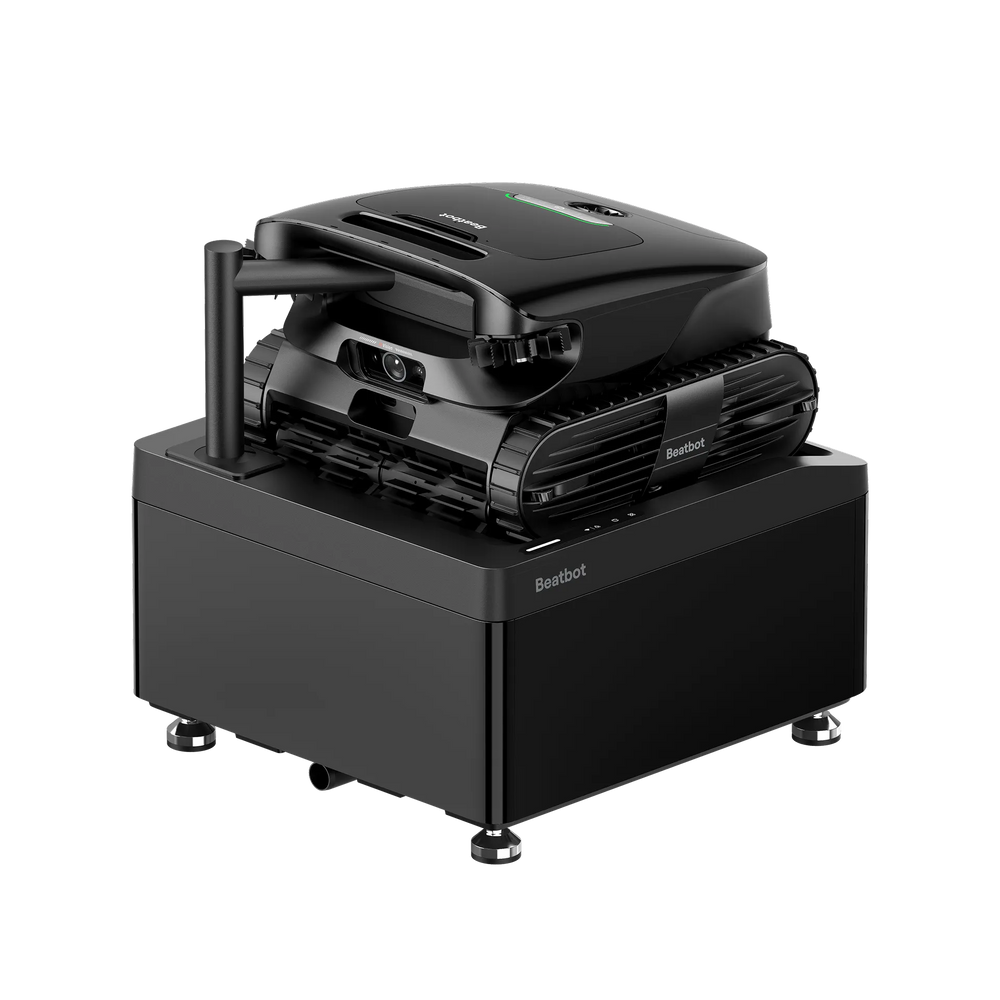
Both advertise surface and underwater cleaning. AquaSense X adds an AstroRinse station to wash its filter and collect debris. That can change the care routine, but the station needs its own installation plan.
Based on published manufacturer information.
Checked Nov 25 · In stock when checked. Shipping and tax at checkout.
Buy at Lowe’s See all offers & model details ↗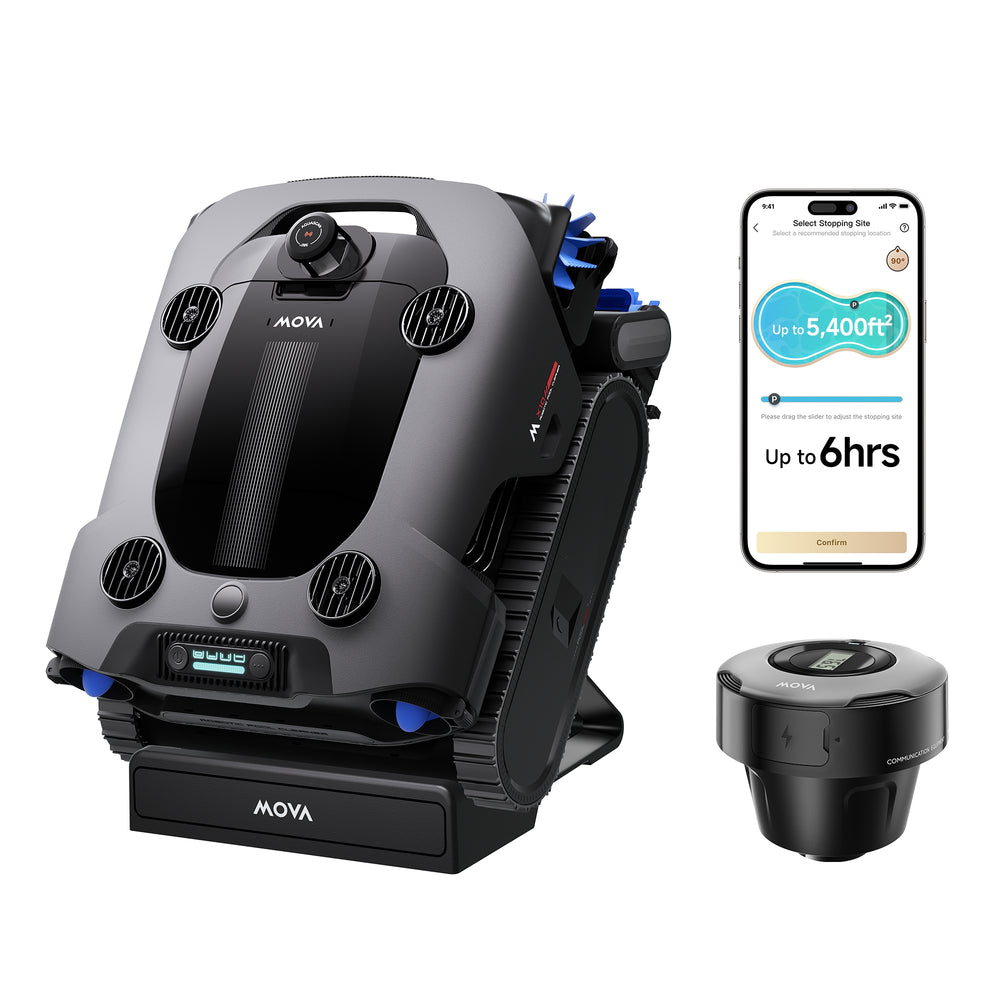
Checked Nov 27 · In stock when checked. Shipping and tax at checkout.
Buy at Lowe’s See all offers & model details ↗We may earn a commission when you buy through these links.
Our recommendations come from published specifications. We may earn a commission from qualifying purchases. As an Amazon Associate, we earn from qualifying purchases. How we work
The quick verdict
Here’s where we’d start.
Consider AquaSense X when its filter-cleaning station would reduce a recurring chore and the water, drainage, power and access arrangements fit. Assess Rover X10 when its cleaning jobs and manual basket-care routine suit the owner. A three-minute station cycle is not pool-cleaning runtime or proof of automatic transfer from the water.
AquaSense X
AstroRinse advertises a three-minute filter-cleaning process and a 22-liter station debris basket.
Confirm installation and the handoff from pool to station; surface parking does not establish autonomous transfer.
Rover X10
Rover advertises seven cleaning zones and a 5-liter basket with 180- and three-micron filtration.
Check the 34.8-pound published dry weight and clarify the page’s six-hour versus 6–12-hour runtime wording.
Decide whether filter washing is the chore you want to reduce
Beatbot AquaSense X advertises AstroRinse filter cleaning and debris emptying. MOVA Rover X10 lists a removable 5-liter basket and filters for owner care.
If frequent basket washing is the frustration, the station deserves attention. If the awkward part is lifting the robot, assess that separately with the retrieval guide.
Do not turn three minutes into a cleaning-cycle claim
Beatbot’s three-minute figure describes the station’s filter-cleaning and debris-emptying process. Its 22-liter station basket and up-to-two-month emptying claim also concern maintenance, with the real interval depending on the debris collected.
Neither figure describes pool-cleaning runtime. Keep them separate from Rover’s six-hour headline and 6–12-hour table. Use the mode guide to identify the actual cleaning job.
Measure the proposed station site before buying
Imagine the planned site is 20 feet from the water source. Beatbot lists a supplied 12-foot water-feed hose, a six-foot drain hose and a four-meter power cord. That site cannot be approved from the supplied feed hose alone.
Measure the routed distances, drainage, access and Wi-Fi coverage. Ask Beatbot for an approved arrangement rather than assuming any extension works. Our caddy and storage-route guide covers the handling side.
Compare the filters alongside the way they are cleaned
AquaSense X’s FAQ gives a 150-micron capture rating. Rover describes 180-micron and three-micron filtration. Those are manufacturer descriptions, not a common filtration test.
An automated wash does not by itself prove finer particle capture. Use the fine-filter guide and filter-care guide.
Walk through the trip from the water to charging
AquaSense X advertises surface parking for retrieval. Do not assume that feature delivers the robot onto AstroRinse; confirm the complete handoff and approved placement.
Rover’s 34.8-pound specification is a dry published weight, not a measured wet lift. The transport guide helps plan draining and movement.
Pay for the station when it improves a routine you can use
Both exact variants were available when checked. Choose AquaSense X for assessment when filter washing is a recurring burden and the station installation works. Consider Rover when its cleaning jobs and manual care fit the household. Confirm the actual geometry with the pool-measurement guide before deciding.
A closer look
The differences, in view.
Scroll horizontally on smaller screens. Values are manufacturer claims; see each product for qualifiers and original wording.
| Specification | AquaSense X | Rover X10 |
|---|---|---|
| Cleaning coverage | Floor, walls, waterline, surfaceShallow-platform claim states ≥35 cm without identifying the dimension. Confirm geometry; no depth limit is normalized. | Floor, walls, waterline and water surfaceMOVA describes 7-in-1 coverage; steps and shallow areas need a layout check. |
| Pool types | In-ground, above-ground | Not confirmed |
| Pool surfaces | Concrete, vinyl, fiberglass, ceramic tile, stainless steel | Not confirmed |
| Filtration | 150 μmManufacturer particle-capture rating. Exact filter-layer count is not established. | 180 μm filter and replaceable 3 μm ultra-fine filter |
| Retrieval | Automatic water-surface parkingSurfaces and releases internal water for retrieval; autonomous transfer to the station is not documented. | Not confirmed |
| Connectivity | App mode switching + remote controlWhile the robot is on the water surface. Specific wireless bands are not established in the captured AquaSense X text. | Not confirmed |
| Navigation | HybridSense AI mapping + debris detection | Not confirmed |
Ready to choose?
Your next step, made simple.
Checked Nov 25 · In stock when checked. Shipping and tax at checkout.
Buy at Lowe’s See all offers & model details ↗Checked Nov 27 · In stock when checked. Shipping and tax at checkout.
Buy at Lowe’s See all offers & model details ↗We may earn a commission when you buy through these links.
Show your work
Sources & editorial method.
We reviewed official US product information and exact configurations. Our advice draws on published specifications and model-specific manufacturer instructions, with the practical trade-offs explained. Unknowns and conflicting claims are kept visible. Prices above come from the catalog and may change independently of this article’s review date.
- Beatbot official US model page
- Beatbot exact variant availability
- MOVA official US model page
- MOVA exact variant availability
Published Nov 22, 2026 · Editorial review Nov 22, 2026.
Read our research standardsKeep exploring
A little more perspective.
Do you need a pool-cleaner caddy? Check the lift and the route to storage
A trolley can make a repeated walk easier, but the cleaner still has to come out of the water. Check the coping, steps, storage route and exact accessory before paying for a caddy or a bundle.
Read the guide
Do You Need an Ultra-Fine Filter for Your Robotic Pool Cleaner?
A finer filter is worth investigating when the robot collects the leaves but leaves smaller dirt behind. First check the exact part, whether it's included and which cleaning modes allow it. On some models, adding the finer layer also changes the recommended routine.
Read the guide