Planning guide · 4 min read
How to Measure Your Lawn for a Robot Mower
The property size on a listing isn't necessarily the amount a mower will cut. We'd draw each patch of grass, subtract the house and hard surfaces, then add the mowing zones together. The awkward routes and available working hours need checking alongside that total.
Based on published manufacturer information.
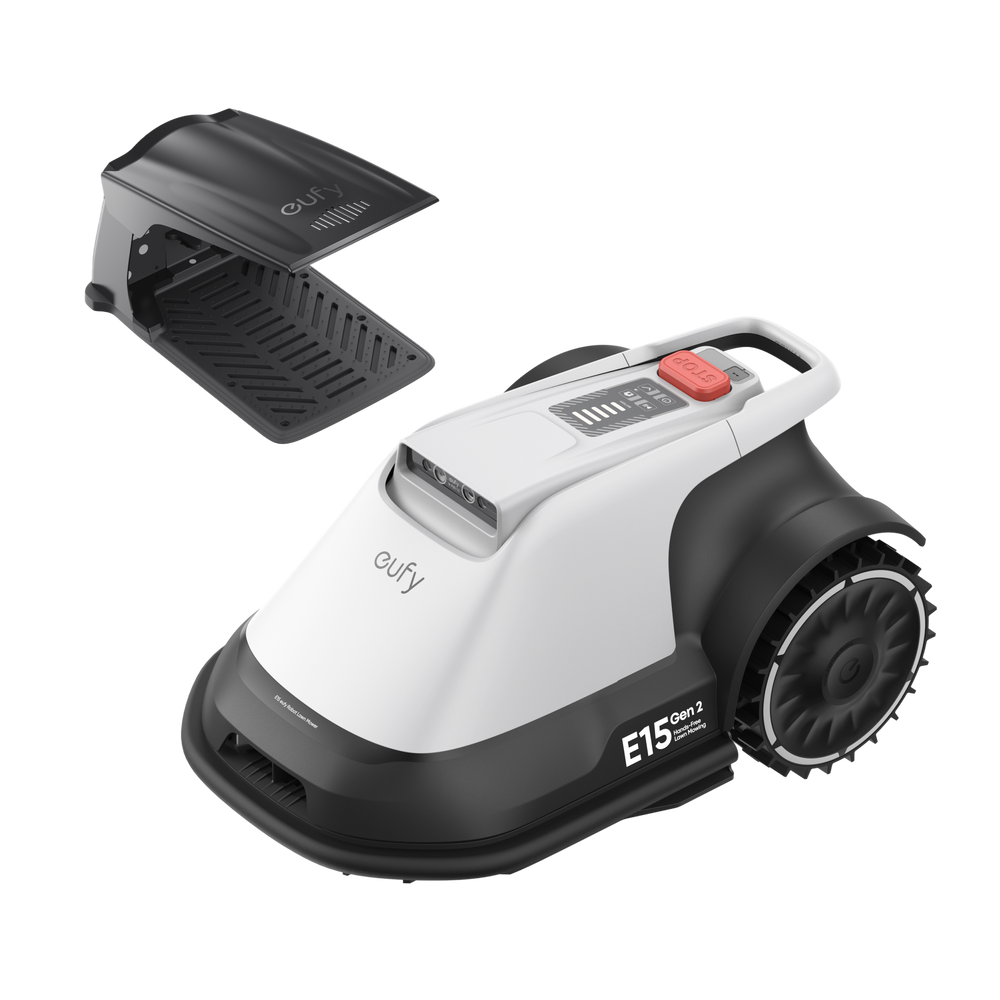
Checked Nov 27 · In stock when checked. Shipping and tax at checkout.
Buy at Lowe’s See all offers & model details ↗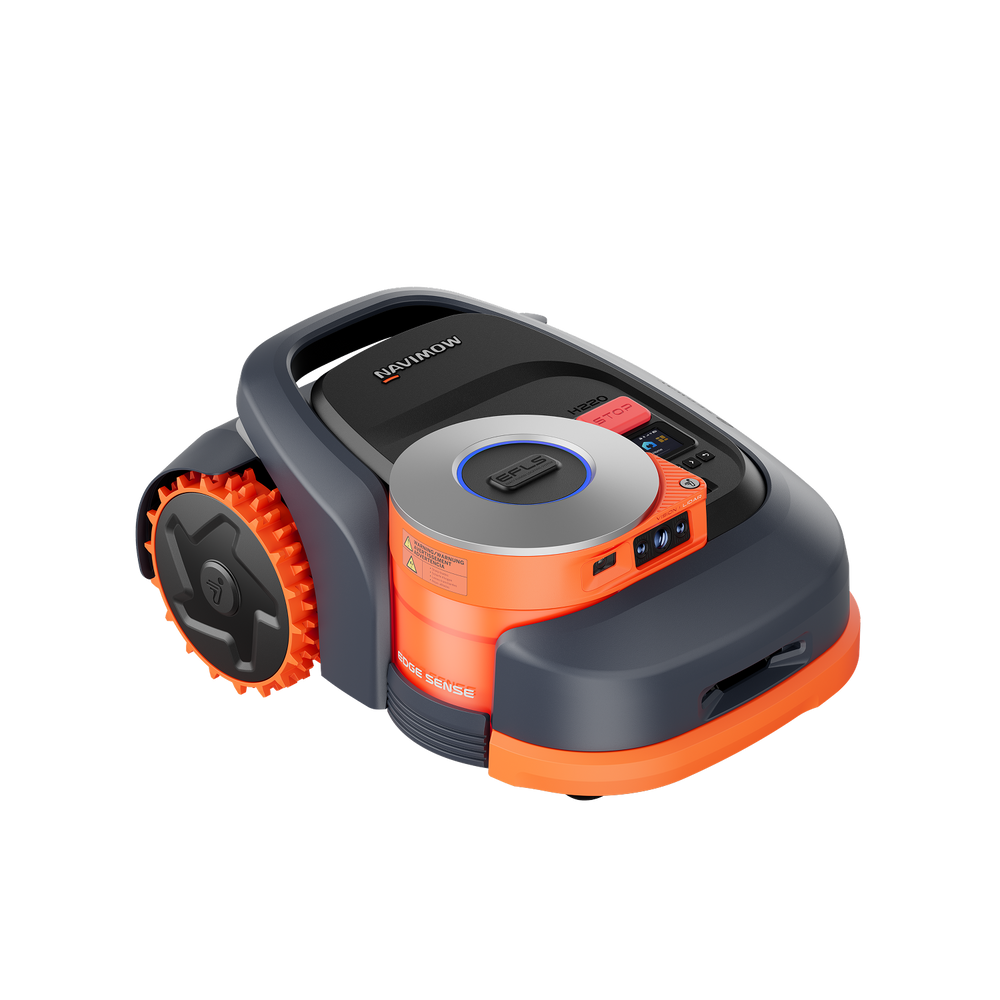
Checked Nov 27 · In stock when checked. Shipping and tax at checkout.
Buy at Lowe’s See all offers & model details ↗We may earn a commission when you buy through these links.
Our recommendations come from published specifications. We may earn a commission from qualifying purchases. As an Amazon Associate, we earn from qualifying purchases. How we work
The quick verdict
Here’s where we’d start.
Measure the grass the robot will maintain, rather than the whole lot. Add all mowing zones and compare that total with the exact model's recommended area, not per-charge output or maximum map storage. Eufy Gen 2's 1,000 m² rating is about 0.247 acre; Navimow H220 recommends half an acre despite a separate 0.6-acre maximum mapping statement. Then have routes, ground and realistic working hours checked before buying close to a limit.
E15 Gen 2
E15 Gen 2’s manual rounds 1,000 m² to a quarter acre; the precise conversion is about 0.247 acre.
That is lawn area, not one-charge output or approval for every grass type and layout.
H220
H220 recommends half an acre while its FAQ separately describes up to 0.6 acre of supported mapping.
Shop around the recommendation. All zones share the supported total; routes and working hours still matter.
Draw the mowing areas, rather than the whole property.
Sketch the front, back and side lawns separately. Leave out the house, patio, drive, beds and other places the robot won't mow. Label the patches so a strip beside the garage isn't counted twice or forgotten.
A satellite measuring tool can give a useful starting estimate, but check unclear edges and narrow areas on the ground. Note which gates normally stay shut and where the charging station could go. Our separate-lawns guide explains why access matters alongside area.
Break an awkward lawn into manageable shapes.
For a rectangular patch, multiply length by width in the same units. Split an L-shaped lawn into two rectangles that don't overlap. For a roughly triangular patch, multiply base by perpendicular height and divide by two. Measure curved areas in smaller pieces rather than pretend one large rectangle is all grass.
For example, a 60-by-80-foot rectangle is 4,800 square feet. Subtract a 10-by-20-foot bed and add a separate 1,000-square-foot front lawn: the mowing total is 5,600 square feet. Keep any rough estimates marked for a better measurement.
Keep the units consistent when comparing models.
One acre is 43,560 square feet. Divide the worked example's 5,600 square feet by that number and you get about 0.13 acre. Don't mix square meters with square feet or use a length in feet as though it were an area.
The eufy E15 Gen 2 recommendation is 1,000 square meters, about 10,764 square feet or 0.247 acre. Its manual's quarter-acre wording is rounding, rather than a separate increase. Use the exact configuration's stated recommendation when comparing offers.
Add the zones before checking the mower’s limit.
Navimow H220 recommends 0.5 acre. Its FAQ separately describes up to 0.6 acre of supported mapping depending on layout, and says the zones share the total map limit. We'd buy around the recommendation, rather than use extra storage to justify a smaller mower.
Likewise, an app label for front and back doesn't give each patch a fresh capacity allowance. Ask the manufacturer how isolated areas and any extra-base arrangement work for the exact machine. Don't assume extra equipment doubles the supported workload.
If the grass is divided into separate lawns, read one robot mower or two. Its worked layout keeps each area’s requirements beside the combined workload.
The area total doesn’t answer every fit question.
Record narrow passages, steep edges, soft spots and the route home. A mower may have enough stated area yet lack an approved way to reach a second lawn. Send the sketch, dimensions and photos with those difficult places marked.
Then consider the hours available around family use, irrigation and weather. Travel and charging use the window too; recommended lawn area isn't the grass finished in one battery session. Our mowing-frequency guide explains how the routine affects the choice.
Use the measurements to narrow the right size tier.
Keep a record of the measured grass, uncertain patches, routes and normal cutting height. If the total sits close to a recommendation, ask the manufacturer about that actual layout and timetable. There isn't one universal percentage of spare capacity that fixes every garden.
Our small-yard guide and half-acre guide are useful next steps once the area is clear. Choose the size that suits the real work, then confirm installation and equipment.
Our Greenworks C20/C40 guide shows why the measured area should go to the manufacturer when a page conflicts: C40 has one-acre headlines but a half-acre detailed-table entry.
The Sunseeker X9/X9 Plus comparison puts measured grass area beside a two-day mowing claim. A three- or six-acre headline does not describe one-charge coverage or the entire property’s suitability.
Our Greenworks C20/C30Z comparison puts half- and three-quarter-acre claims beside the same stated cutting specifications. The measured lawn area gives a clearer reason to choose the larger model.
For a large property, our X9 versus One Plus 10A guide shows why three acres in 48 hours and 1.73 acres per day still need a site-specific schedule assessment.
A closer look
The differences, in view.
Scroll horizontally on smaller screens. Values are manufacturer claims; see each product for qualifiers and original wording.
| Specification | E15 Gen 2 | H220 |
|---|---|---|
| Rated lawn coverage | 0.2471 acresNormalized from 1,000 m² manufacturer coverage claim; not per-charge coverage. | 0.5 acreRecommended model-specific lawn size, not the expanded mapping allowance. |
| Maximum slope | 18 °Visible mower setup FAQ; boundary-slope limit not specified. | Not confirmed |
| Navigation | TrueVision camera navigation | LiDAR + network RTK + vision |
| Boundary setup | No perimeter wire or RTK stationManufacturer configuration claim, not a guarantee of signal reliability. | Not confirmed |
| Connectivity | Wi-Fi setup; 4G supportedThe page does not establish this generation’s data subscription terms. | Not confirmed |
| Cutting height | 1–3 inE15 Gen2 T280L user guide, section 2.4; not transferred from the original E15. | Not confirmed |
| Cutting width | 8 inE15 Gen2 T280L specification table. | Not confirmed |
Ready to choose?
Your next step, made simple.
Checked Nov 27 · In stock when checked. Shipping and tax at checkout.
Buy at Lowe’s See all offers & model details ↗Checked Nov 27 · In stock when checked. Shipping and tax at checkout.
Buy at Lowe’s See all offers & model details ↗We may earn a commission when you buy through these links.
Show your work
Sources & editorial method.
We reviewed official US product information and exact configurations. Our advice draws on published specifications and model-specific manufacturer instructions, with the practical trade-offs explained. Unknowns and conflicting claims are kept visible. Prices above come from the catalog and may change independently of this article’s review date.
- Current manufacturer US model page — exact configuration, specifications, modes and limitations
- Current manufacturer US model page — exact configuration, specifications, modes and limitations
- eufy E15 Gen 2 T280L manual — exact coverage, cutting dimensions, charging and cellular-data scope
- Navimow H2 US manual — exact H210/H220 ratings, standard cut, map elements and model-specific installation
Published Nov 3, 2026 · Editorial review Nov 25, 2026.
Read our research standardsKeep exploring
A little more perspective.
One robot mower or two? Plan the routes and workload before buying
Two smaller mowers can solve a physical separation problem, but they also mean two installations and two care routines. Start with the grass in each area, the connection between them and the hours each machine can work.
Read the guide
Robot Mowers for Separate Front and Back Lawns: What to Check
Two lawns don't necessarily need two mowers. The important questions are whether one robot can cover their combined area, travel between them and get back to charge. A closed gate can matter more than a long list of mapping features.
Read the guide