Model comparison · 5 min read
ANTHBOT M9 vs M9 PRO: Is Pro Worth It?
M9 PRO adds LiDAR and a setup advertised without a local RTK station. We'd pay for that when it would make the installation or mowing routine easier. The standard M9 is still worth considering if its positioning setup suits your yard.
Based on published manufacturer information.
Checked Nov 27 · In stock when checked. Shipping and tax at checkout.
Buy at Lowe’s See all offers & model details ↗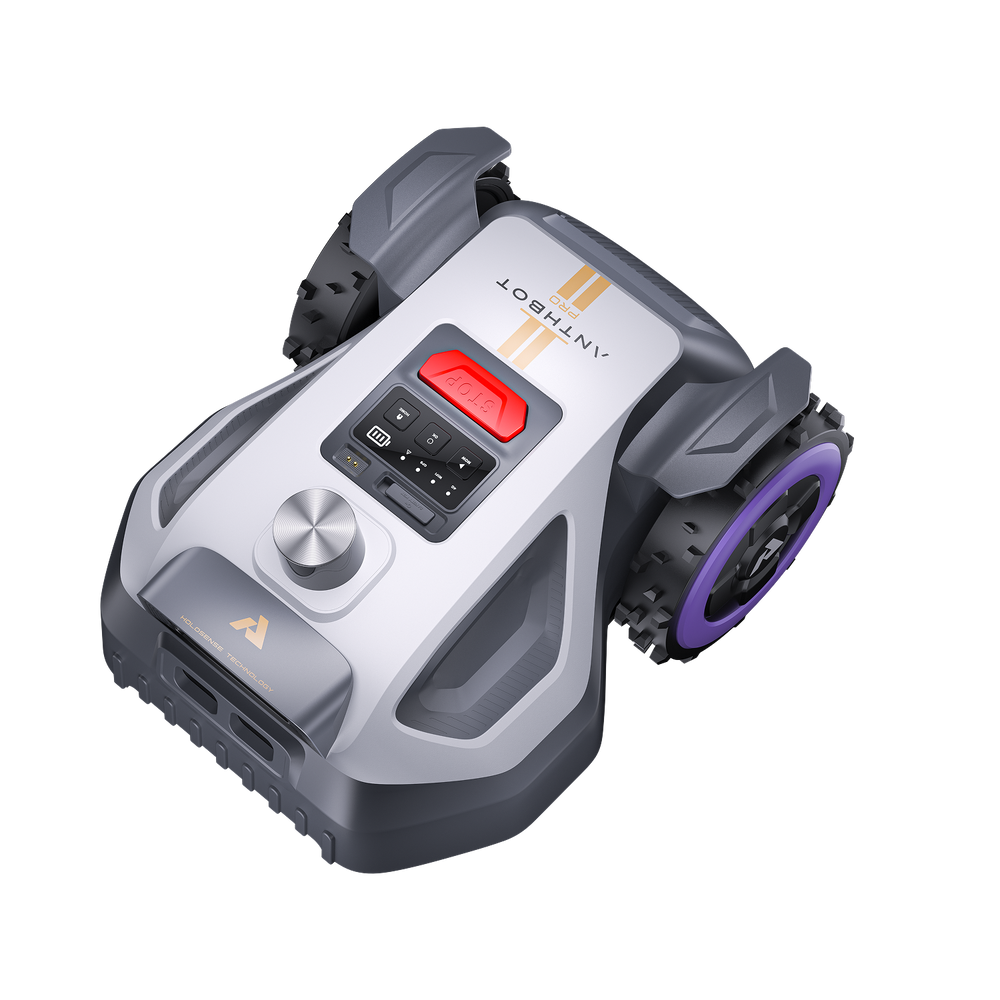
Checked Nov 27 · In stock when checked. Shipping and tax at checkout.
Buy at Lowe’s See all offers & model details ↗We may earn a commission when you buy through these links.
Our recommendations come from published specifications. We may earn a commission from qualifying purchases. As an Amazon Associate, we earn from qualifying purchases. How we work
The quick verdict
Here’s where we’d start.
We'd consider M9 when its RTK-and-vision setup fits the property, and M9 PRO when LiDAR and the advertised no-local-station installation would be useful. Both are roughly quarter-acre choices with the same stated 45% maximum slope and 25.6-inch narrow-passage claims. Pro isn't a larger-lawn upgrade. Confirm the exact positioning arrangement, service terms and equipment before ordering either.
M9
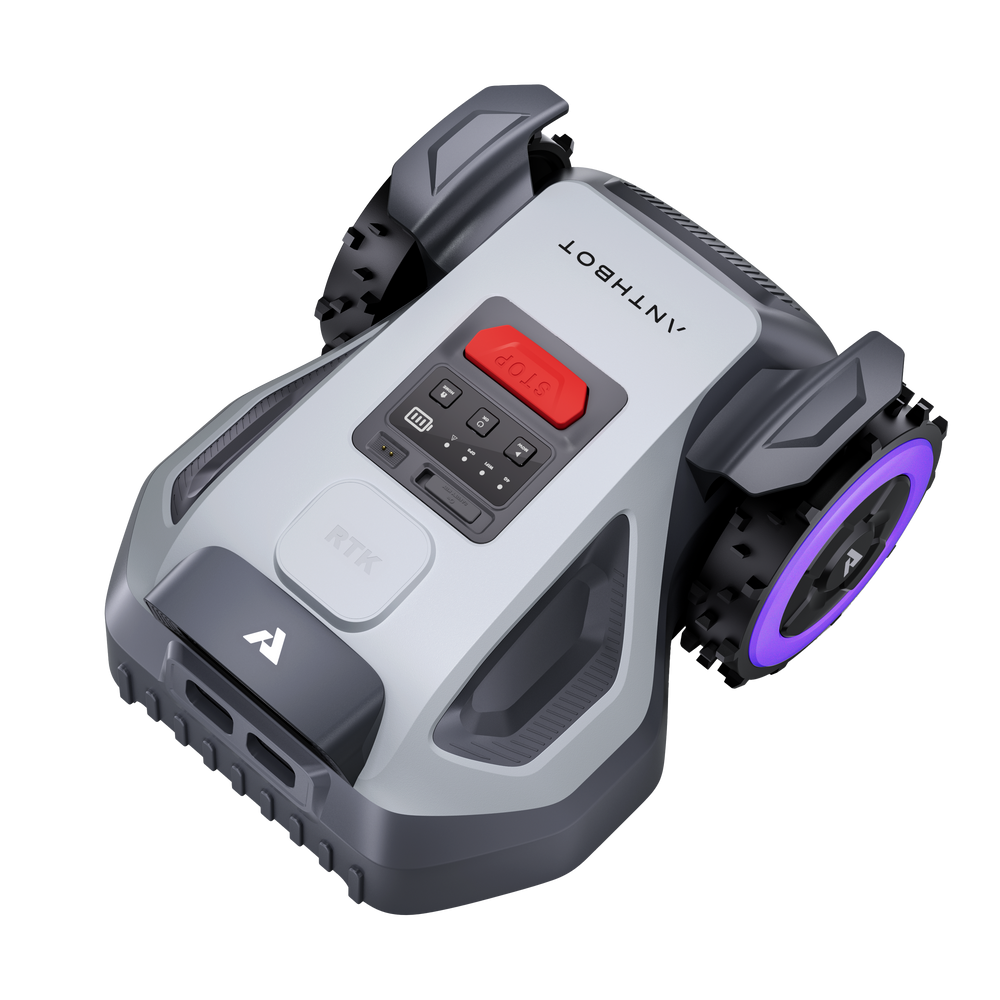
M9 offers RTK and dual-camera vision for a roughly quarter-acre lawn without perimeter wire.
Its page mixes RTK installation, NetRTK service and reused box wording. Confirm the selected setup and subscription.
M9 PRO
M9 PRO advertises LiDAR/RTK/NetRTK/vision positioning without a local RTK-station installation.
That claim doesn't establish free service, guaranteed tree coverage or a larger mowing area.
Pro changes the positioning setup.
The ANTHBOT M9 describes full-band RTK and dual-camera vision. The M9 PRO adds 360-degree LiDAR in its HoloSense positioning system, alongside RTK/NetRTK and vision. We'd compare those approaches against the house, trees and open areas the robot needs to navigate.
M9 PRO explicitly advertises installation without a local RTK station. That can be attractive if you don't want another antenna installed in the garden. It doesn't tell us that positioning will be equally reliable in every yard, or that no network service is involved. Our navigation guide explains the distinctions.
Don’t buy Pro expecting a bigger lawn allowance.
Both pages describe about 1,000 square meters, or roughly a quarter acre. M9's metric area converts to about 0.247 acre, while M9 PRO's page rounds it to a quarter acre. That small rounding difference doesn't establish a meaningful capacity advantage for Pro.
Measure the grass in all the zones, leaving room for layout and charging rather than counting the entire property. If the lawn is already beyond this size, spending on the Pro badge doesn't settle the problem. Our small-yard mower guide helps compare sizes and other installation approaches.
For a smaller PRO alternative, our M5 PRO versus M9 PRO comparison checks whether 500 square meters would already be enough, with the shared cutting range and positioning kept beside the capacity decision.
Ask how the selected M9 package actually gets its position.
M9's page describes RTK installation and also NetRTK over 4G, with a separate subscription noted for 4G/NetRTK. Its box section even reuses an M5 machine label. We'd ask ANTHBOT to confirm which positioning arrangement, hardware and services come with the actual M9 order, rather than combine every statement into one assumed package.
For M9 PRO, get the address coverage and service terms checked as well. No local station doesn't mean free connectivity forever. Our mower-subscription guide explains the questions to ask about positioning, remote app control and renewals.
The awkward route still needs checking with either model.
Both list a narrowest passage of 65 cm, about 25.6 inches, and a maximum climbing claim of 45%. Treat those as manufacturer limits under their conditions. A straight passage isn't the same as a tight turn between raised borders, and a climbing maximum isn't a boundary-slope approval.
Send photos and measurements of the tightest route and any steep edge. LiDAR doesn't physically widen a gate. Our separate front-and-back lawns guide covers the route questions, while the hilly-yard guide explains why traction and turning room matter too.
For a route-led comparison across brands, our narrow passages and gates guide keeps manufacturer passage claims separate from turning room, safe boundaries and actual gate access.
Choose for the grass height you actually keep.
M9 PRO lists a 1.2–2.8-inch cut. Check the exact M9 height range and both models' current instructions before choosing for your grass; we wouldn't transfer a Pro table or an older M5 specification to the standard M9 without confirmation. Navigation is only part of getting the mower right.
Ask about station placement, replacement blades and how you'd use the app day to day. Our Wi-Fi coverage guide separates communication from the robot's positioning job. Also confirm edge clearances: an edge-mowing feature doesn't mean the robot replaces a trimmer around every wall.
Buy Pro when its setup would make your life easier.
We'd consider the standard M9 when the confirmed RTK arrangement works for the property and the package price is appealing. We'd investigate Pro when LiDAR or avoiding a local station solves a specific installation problem. We don't have a same-yard test that turns those features into a measured navigation winner.
Our ANTHBOT lineup guide puts both beside the other sizes. For a smaller lawn, M5 versus M5 PRO versus M5 LiDAR is the more relevant comparison. The best upgrade is one that changes a job or setup you would otherwise struggle with.
If the alternative is another brand, our M9 PRO versus H210 comparison keeps their similar area tier beside the lower ANTHBOT range, taller standard Navimow cut and exact route requirements.
If standard M9 is already enough, our standard M5-versus-M9 comparison helps check whether the smaller 500 m² recommendation would cover the measured lawn too.
A closer look
The differences, in view.
Scroll horizontally on smaller screens. Values are manufacturer claims; see each product for qualifiers and original wording.
| Specification | M9 | M9 PRO |
|---|---|---|
| Rated lawn coverage | 0.2471 acreConverted from the manufacturer’s square-metre rating. | 0.25 acre |
| Navigation | RTK + vision + 4G | 360° LiDAR + RTK/NetRTK + vision |
| Boundary setup | No perimeter wire | No perimeter wire or local RTK station |
| Cutting height | Not confirmed | 1.2–2.8 in |
Ready to choose?
Your next step, made simple.
Checked Nov 27 · In stock when checked. Shipping and tax at checkout.
Buy at Lowe’s See all offers & model details ↗Checked Nov 27 · In stock when checked. Shipping and tax at checkout.
Buy at Lowe’s See all offers & model details ↗We may earn a commission when you buy through these links.
Show your work
Sources & editorial method.
We reviewed official US product information and exact configurations. Our advice draws on published specifications and model-specific manufacturer instructions, with the practical trade-offs explained. Unknowns and conflicting claims are kept visible. Prices above come from the catalog and may change independently of this article’s review date.
- ANTHBOT M9 US page — RTK/vision, mixed positioning/setup statements, area, passages and separate NetRTK service
- ANTHBOT M9 PRO US page — exact LiDAR/RTK/NetRTK/vision system, no local station, size and shared physical limits
Published Nov 2, 2026 · Editorial review Nov 4, 2026.
Read our research standardsKeep exploring
A little more perspective.
vsANTHBOT M5 PRO vs M9 PRO: Which Size Should You Buy?
M9 PRO's clear reason to buy is its larger recommended lawn area. Both list the same cutting range, disc width and positioning arrangement. We'd measure the whole lawn first, then decide whether M5 PRO is already enough for the way you mow.
Read the guidevsANTHBOT M5 vs M9: Which Lawn Size Do You Need?
Standard M5 and M9 use RTK and vision, with an app-adjusted 3–7 cm cutting range. The headline lawn ratings differ: 500 m² for M5 and 1,000 m² for M9. We'd measure the grass first, then check M9's reused mapping copy and the exact installation and service package.
Read the guide