Setup guide · 3 min read
Can a Robot Mower Cross a Driveway Between Lawns?
Some robot mowers can travel between mapped lawns, but a pathway feature doesn't approve every driveway. Check the surface, level changes, route width and vehicle access before buying. E15 Gen 2 pathways and Navimow H2 channels show why the answer needs to stay specific to the mower and the route.
Based on published manufacturer information.
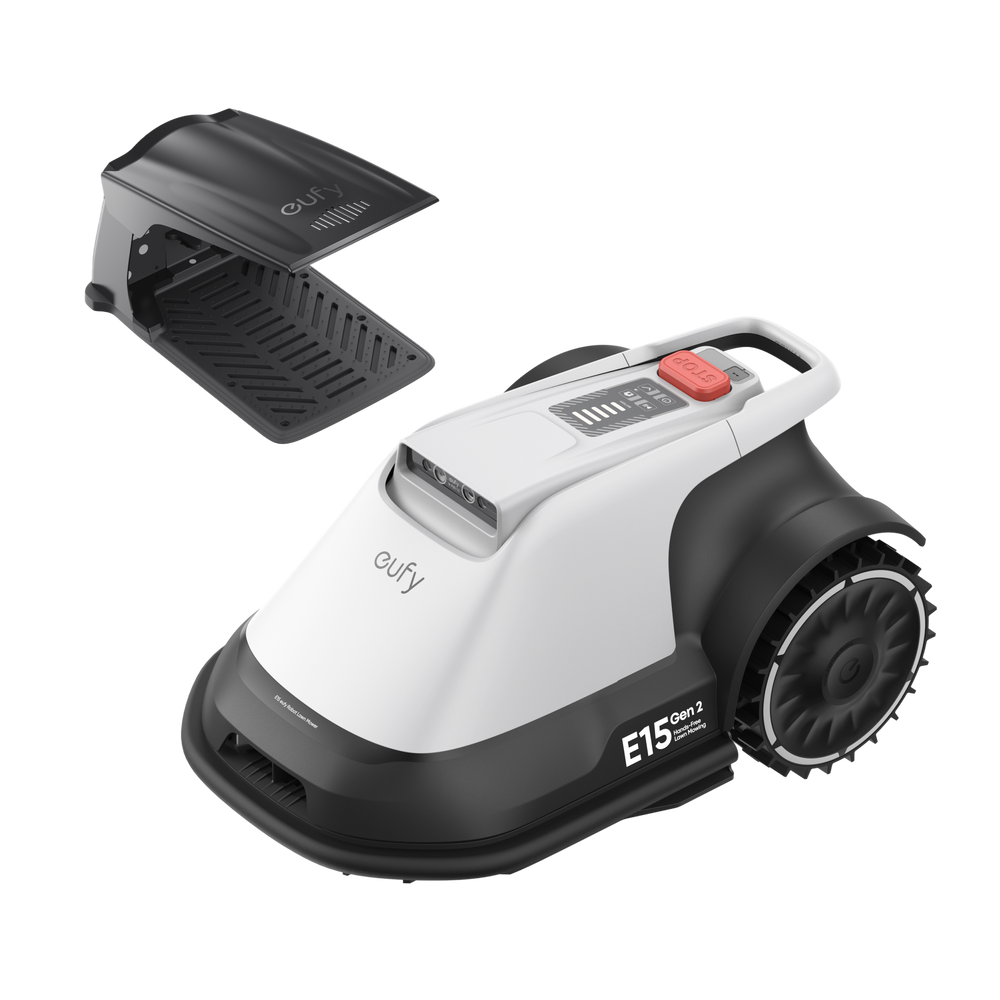
Checked Nov 27 · In stock when checked. Shipping and tax at checkout.
Buy at Lowe’s See all offers & model details ↗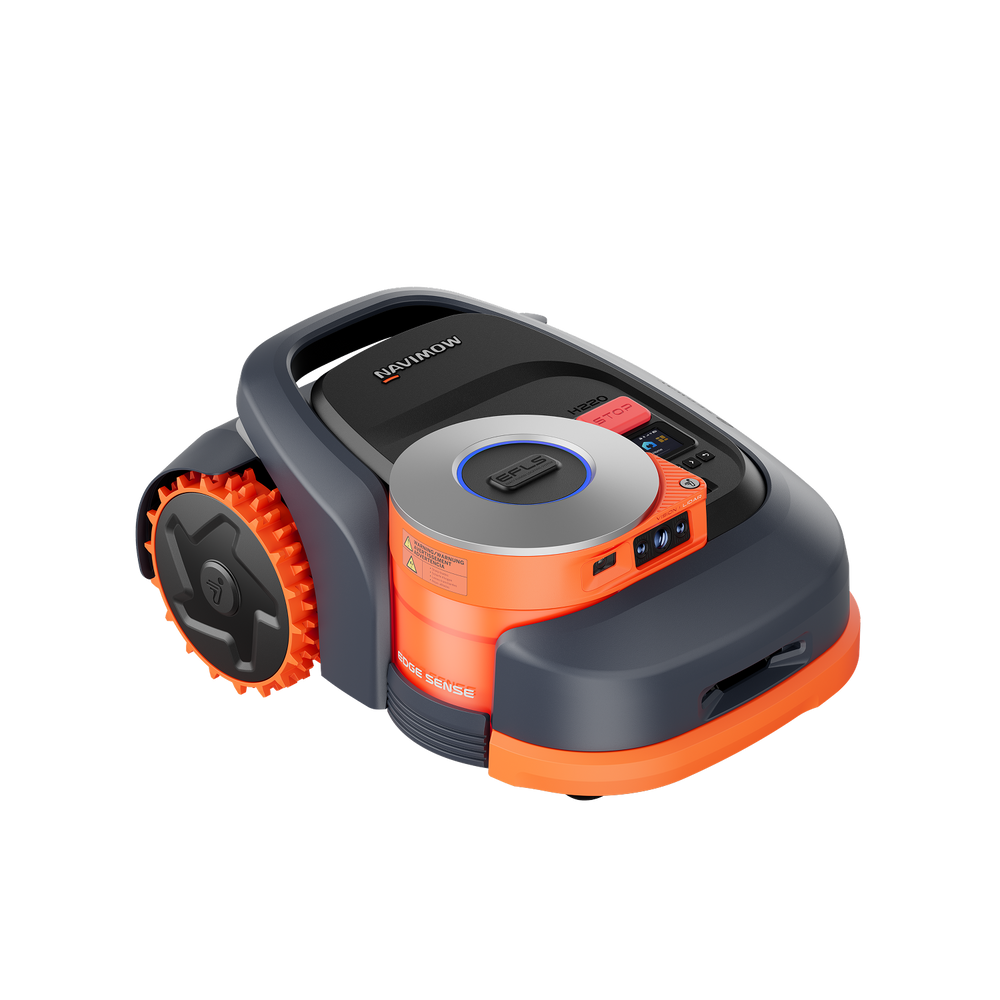
Checked Nov 27 · In stock when checked. Shipping and tax at checkout.
Buy at Lowe’s See all offers & model details ↗We may earn a commission when you buy through these links.
Our recommendations come from published specifications. We may earn a commission from qualifying purchases. As an Amazon Associate, we earn from qualifying purchases. How we work
The quick verdict
Here’s where we’d start.
Get the complete route confirmed for the exact mower. E15 Gen 2 documents cross-zone pathways; Navimow H2 documents channels wider than one meter. Those features do not approve every paved, loose or uneven surface, and they cannot manage vehicle traffic for you. Record the narrowest width, both lawn-to-driveway transitions and any gates. If there is no suitable connection, compare the documented manual-transfer arrangement instead.
E15 Gen 2
The T280L manual documents pathways between non-adjacent lawn areas; the current FAQ gives a 60-meter maximum distance between lawns.
Neither statement establishes approval for every driveway surface, drop or traffic arrangement. Confirm the actual route.
H210
The US H2 manual describes channels between zones or the charger and lawn, with a width greater than one meter.
Keep the strict channel-width requirement and full route conditions. Do not copy it to another mower or disable detection to force a crossing.
A driveway crossing is a route, not another lawn zone.
Start by drawing both lawns, the charger and the strip the mower would use between them. Mark gates, parked cars, kerbs, drains and any drop beside the route. The mower needs a workable journey out and back, including when the battery needs charging.
Our separate-lawns guide covers the total mowing area and manual-transfer alternatives. A second map doesn't create a physical connection, and neither lawn receives a separate capacity allowance.
If the connector also passes beside water, consult our pond-and-pool boundary guide. Keep an unsuitable strip out of automatic travel rather than reduce an exclusion simply to make the connection fit.
E15 Gen 2 documents a cross-zone pathway.
eufy E15 Gen 2's T280L manual says to use the Pathway function for non-adjacent lawn areas and follow the app's setup instructions after mapping the first area. Its current FAQ describes a maximum distance of 60 meters between lawns for the multi-zone pathway.
That distance isn't a maximum driveway width, a passage-width specification or approval for every surface. Send eufy photos and measurements of the intended route. Our narrow-passage guide explains why the tightest point matters.
H2 gives a specific channel-width requirement.
Navimow H210's US H2 manual describes channels connecting separate mowing zones or the lawn and charging station. It says a channel should be wider than one meter, about 3.3 feet. It also advises avoiding narrow, uneven paths with obstacles when guiding the mower between zones.
Measure the usable width with gates and parked objects in their normal positions. Don't transfer H2's requirement to E15 Gen 2 or another Navimow family. Our H210-versus-H220 guide covers the separate area-tier choice.
Photograph both places where grass meets the driveway.
A flush join and a raised kerb present different questions. Record surface material, gaps, steps, slope changes and the narrowest usable space. Ask the manufacturer about that complete route, including turning and returning to charge, rather than asking only whether the mower can drive on concrete.
Keep any blade behavior and crossing settings tied to the model's instructions. Don't turn off obstacle detection to force an unconfirmed route. Our mower-stuck guide covers repeated trouble after an installation has been checked.
Our no-go-zone setup guide covers protected areas beside a route, with the exact model’s boundary and mapping requirements kept separate from approval for the crossing itself.
Plan vehicle access separately from mapping.
A camera can help a mower recognize obstacles; it isn't a traffic-control system. Decide how you will keep the route clear while the mower uses it. If the connection depends on crossing a public road or a live vehicle lane, plan another arrangement rather than rely on a mapped line to make it suitable.
A parked car or closed gate can also block the way home. Our docking-return guide explains why the charger location and route need checking together.
Get the crossing confirmed before paying for extra capacity.
Send the exact model name, route sketch, measurements and photos to the manufacturer or installer. Ask whether the proposed surface and transitions are supported, which settings apply and how the route should be kept clear. Test only the setup they approve, following the model's instructions.
If the route cannot work, compare a documented manual-transfer or extra-base arrangement and include its cost and handling. Our charger-placement guide helps put that alternative on the drawing before you choose a larger mower.
A closer look
The differences, in view.
Scroll horizontally on smaller screens. Values are manufacturer claims; see each product for qualifiers and original wording.
| Specification | E15 Gen 2 | H210 |
|---|---|---|
| Rated lawn coverage | 0.2471 acresNormalized from 1,000 m² manufacturer coverage claim; not per-charge coverage. | 0.25 acreRecommended model-specific lawn size, not the expanded mapping allowance. |
| Maximum slope | 18 °Visible mower setup FAQ; boundary-slope limit not specified. | Not confirmed |
| Navigation | TrueVision camera navigation | LiDAR + network RTK + vision |
| Boundary setup | No perimeter wire or RTK stationManufacturer configuration claim, not a guarantee of signal reliability. | Not confirmed |
| Connectivity | Wi-Fi setup; 4G supportedThe page does not establish this generation’s data subscription terms. | Not confirmed |
| Cutting height | 1–3 inE15 Gen2 T280L user guide, section 2.4; not transferred from the original E15. | Not confirmed |
| Cutting width | 8 inE15 Gen2 T280L specification table. | Not confirmed |
Ready to choose?
Your next step, made simple.
Checked Nov 27 · In stock when checked. Shipping and tax at checkout.
Buy at Lowe’s See all offers & model details ↗Checked Nov 27 · In stock when checked. Shipping and tax at checkout.
Buy at Lowe’s See all offers & model details ↗We may earn a commission when you buy through these links.
Show your work
Sources & editorial method.
We reviewed official US product information and exact configurations. Our advice draws on published specifications and model-specific manufacturer instructions, with the practical trade-offs explained. Unknowns and conflicting claims are kept visible. Prices above come from the catalog and may change independently of this article’s review date.
- eufy E15 Gen 2 — exact multi-zone pathway FAQ and distance qualification
- eufy E15 Gen 2 T280L manual — cross-zone pathways and setup
- Navimow H2 US manual — channels, route width and mapping conditions
Published Nov 4, 2026 · Editorial review Nov 10, 2026.
Read our research standardsKeep exploring
A little more perspective.
How to Set Up No-Go Zones for a Robot Mower
Start by walking the lawn and marking the places the mower must avoid, then use the exact model's mapping instructions. E15 Gen 2 no-go zones and Navimow H2 off-limit islands are useful examples, but their names and setup rules differ. Keep the route back to the charger in view too.
Read the guidevsNavimow H210 vs H220: Which Size Should You Buy?
The H220 makes sense when you have more grass to keep up with. For a smaller lawn, the H210 may already give you what you need. Here's how we'd choose between them without confusing extra map storage with a bigger mowing recommendation.
Read the guide