Lawn care · 5 min read
Robot mower near ponds and pools: Check the boundary and the route
A grass edge beside water needs more attention than an ordinary border. Use the exact mower’s entry restrictions, have the installation assessed and check every connector before allowing automatic mowing near a pond or pool.
Based on published manufacturer information.
Checked Nov 27 · In stock when checked. Shipping and tax at checkout.
Buy at Lowe’s See all offers & model details ↗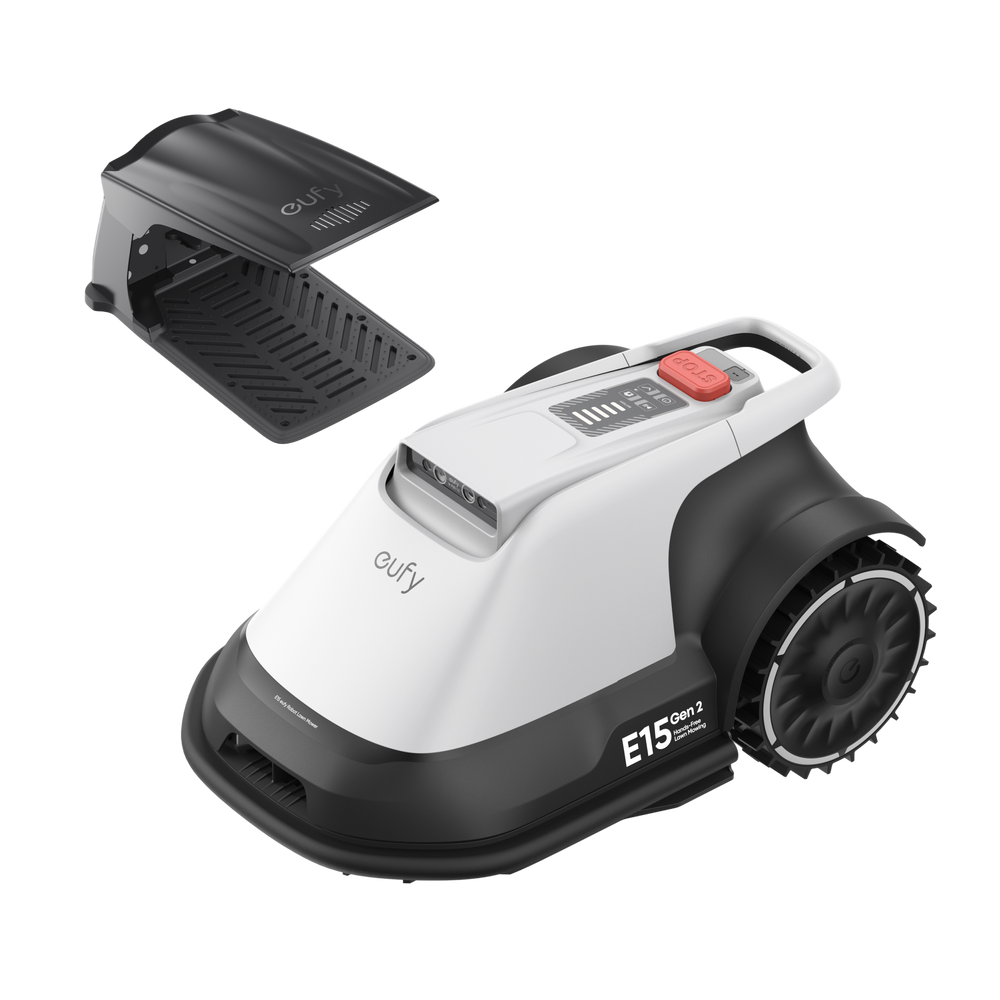
Checked Nov 27 · In stock when checked. Shipping and tax at checkout.
Buy at Lowe’s See all offers & model details ↗We may earn a commission when you buy through these links.
Our recommendations come from published specifications. We may earn a commission from qualifying purchases. As an Amazon Associate, we earn from qualifying purchases. How we work
The quick verdict
Here’s where we’d start.
Keep an unapproved water edge outside the mower’s operating route. Use the exact manufacturer’s required restrictions and physical protection, with a site assessment where needed. Do not rely on grass recognition, obstacle avoidance or a decorative uncut setting to establish that a pond or pool boundary is suitable.
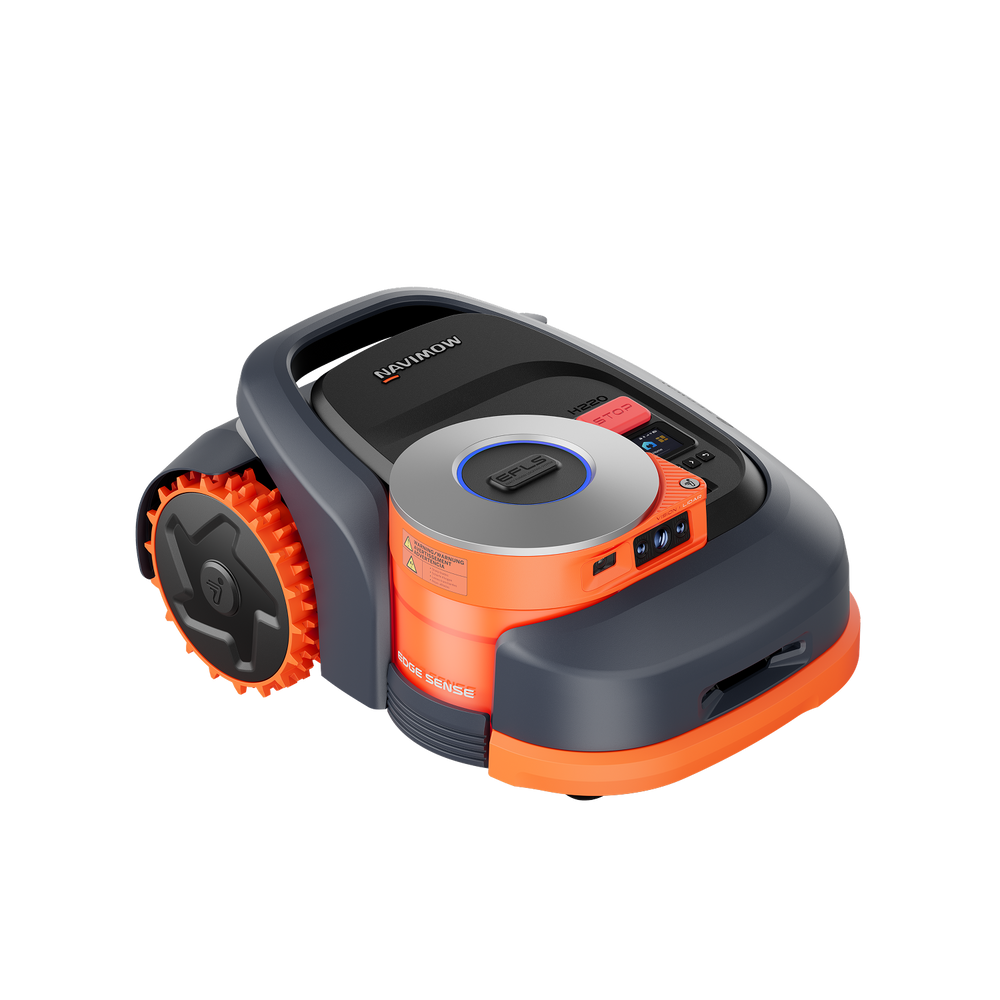
H220
The H2 manual names ponds as an off-limit-island example and separately defines connecting channels.
VisionFence-off disables obstacle-avoidance sensors. It is not a pond exclusion or a remedy for an unsuitable route.
E15 Gen 2
The T280L manual identifies pond and pool edges among situations requiring No-go and Virtual Fence settings.
Set the required restrictions before first auto-mapping. A No-Mow setting is not a substitute for preventing entry.
Walk the water edge before drawing the map.
Look at the actual ground beside the pond or pool: the bank, coping, turns and the route back to the charger. A line on the app cannot describe every change in footing or elevation. Photograph those details for the manufacturer or installer.
Have the exact installation requirements, setbacks and any physical protection confirmed for that site. Leave an unresolved strip outside the operating area. Our lawn-preparation guide and slope-measuring guide help describe the surrounding ground.
Prepare Gen 2 restrictions before the first mapping run.
The eufy E15 Gen 2 T280L manual calls for No-go Zone and Virtual Fence settings around water edges, including ponds and swimming pools, especially where the lawn has no clear boundary from the water. It recommends setting them before first auto-mapping.
Use those exact controls and the current in-app instructions, then confirm the complete installation is suitable. No-Mow leaves an area uncut; use the entry restriction required for the hazard. Our no-go guide explains why those purposes differ.
Keep H2 exclusions separate from sensor-off settings.
On Navimow H220, the H2 manual includes ponds among its off-limit-island examples. A channel serves a different purpose: connecting zones or the lawn to the charging station. Check both the exclusion and every connecting route.
The manual’s VisionFence-off setting disables the camera and LiDAR obstacle avoidance in that zone. Do not use it to make the mower pass a troublesome water edge. Our navigation guide separates positioning from obstacle detection.
A correct pond outline can leave an unsuitable connector.
Imagine a pond excluded from mowing, with a narrow grass strip between the bank and a fence linking two lawn sections. The exclusion itself may look correct while the only route between sections still passes beside the water. Review that connector independently.
If an approved route cannot be established, keep that connection out of automatic operation and ask about a supported alternative for the other lawn. Do not shrink the pond exclusion to force a passage. Our separate-lawn guide covers the broader routing decision.
Check edge-mowing settings after the boundary is approved.
A desire for a neat finish should not decide how close the robot runs to water. Follow the confirmed installation limits even if that leaves grass needing another suitable maintenance method. Cutting closer and establishing an acceptable route are different decisions.
H2’s manual allows Edge Mowing to be disabled for a zone where surroundings are complex. Its Edge Sense feature seeks a closer finish; that does not approve a water boundary. Our edge-cutting guide explains why some borders still need separate attention.
Reassess the site when landscaping changes.
Recheck the boundary after work on the pond, pool surround, fencing or charger approach. An exclusion saved before landscaping may no longer describe the site. Include new equipment, changed ground levels and the entire return route in that review.
Keep automatic operation paused in the affected area until the revised installation is confirmed. Our charger-placement guide and moving-base guide cover the separate implications of changing the charging setup.
Observe the approved route without testing the hazard.
Once the installation and restrictions are confirmed, observe a permitted run from a safe position on land. Check turns and return travel as well as cutting. Do not deliberately steer toward water to find out whether a camera or sensor will stop the machine.
If the mower approaches an unapproved edge, stop operation and have the setup reviewed before restarting. A successful earlier pass does not resolve a changed or uncertain boundary. Our stuck-mower guide addresses ordinary ground problems separately.
A closer look
The differences, in view.
Scroll horizontally on smaller screens. Values are manufacturer claims; see each product for qualifiers and original wording.
| Specification | H220 | E15 Gen 2 |
|---|---|---|
| Rated lawn coverage | 0.5 acreRecommended model-specific lawn size, not the expanded mapping allowance. | 0.2471 acresNormalized from 1,000 m² manufacturer coverage claim; not per-charge coverage. |
| Maximum slope | 45 % | Not confirmed |
| Navigation | LiDAR + network RTK + vision | TrueVision camera navigation |
| Maximum slope | Not confirmed | 18 °Visible mower setup FAQ; boundary-slope limit not specified. |
| Boundary setup | Not confirmed | No perimeter wire or RTK stationManufacturer configuration claim, not a guarantee of signal reliability. |
| Connectivity | Not confirmed | Wi-Fi setup; 4G supportedThe page does not establish this generation’s data subscription terms. |
| Cutting height | Not confirmed | 1–3 inE15 Gen2 T280L user guide, section 2.4; not transferred from the original E15. |
Ready to choose?
Your next step, made simple.
Checked Nov 27 · In stock when checked. Shipping and tax at checkout.
Buy at Lowe’s See all offers & model details ↗Checked Nov 27 · In stock when checked. Shipping and tax at checkout.
Buy at Lowe’s See all offers & model details ↗We may earn a commission when you buy through these links.
Show your work
Sources & editorial method.
We reviewed official US product information and exact configurations. Our advice draws on published specifications and model-specific manufacturer instructions, with the practical trade-offs explained. Unknowns and conflicting claims are kept visible. Prices above come from the catalog and may change independently of this article’s review date.
- Navimow official US page — exact model information
- eufy official US page — exact model information
- Official H2 US manual 260202-A — pond exclusions, channels and edge settings
- Official eufy T280L Gen 2 manual — water edges and entry restrictions
Published Nov 10, 2026 · Editorial review Nov 10, 2026.
Read our research standardsKeep exploring
A little more perspective.
Moving a robot mower’s charging station: Check the new route before restarting
A better-looking corner is only useful if the mower can locate and reach it. Check the new installation first, use the exact model’s relocation procedure, then verify the return journey before restoring the schedule.
Read the guideHow to Prepare Your Lawn for a Robot Mower’s First Run
Clear the loose objects, check the starting grass height and settle the boundaries before launching the first map. E15 Gen 2 and Navimow H2 give different initial-grass instructions, so a robot's maximum selectable cut isn't the preparation limit. Allow time to learn its normal route and return to charge.
Read the guide