Setup and care · 5 min read
Moving a robot mower’s charging station: Check the new route before restarting
A better-looking corner is only useful if the mower can locate and reach it. Check the new installation first, use the exact model’s relocation procedure, then verify the return journey before restoring the schedule.
Based on published manufacturer information.

Checked Nov 27 · In stock when checked. Shipping and tax at checkout.
Buy at Lowe’s See all offers & model details ↗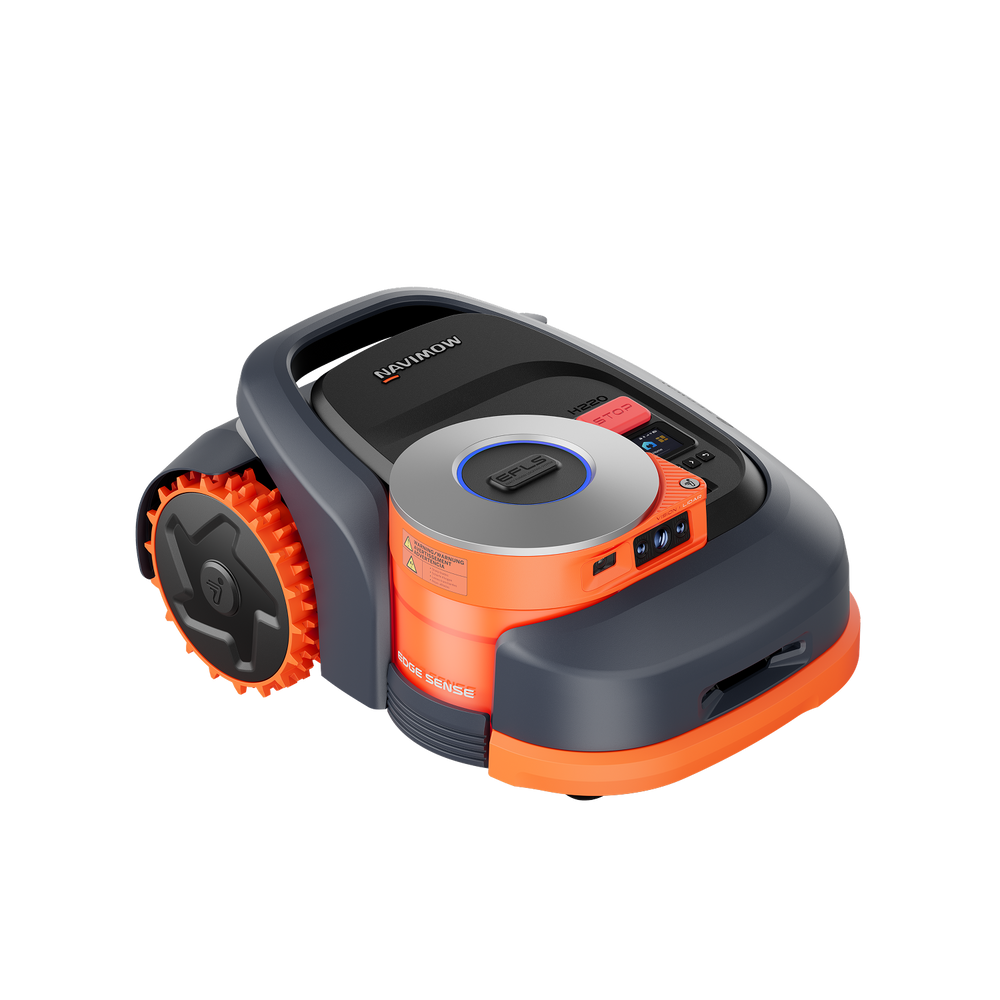
Checked Nov 27 · In stock when checked. Shipping and tax at checkout.
Buy at Lowe’s See all offers & model details ↗We may earn a commission when you buy through these links.
Our recommendations come from published specifications. We may earn a commission from qualifying purchases. As an Amazon Associate, we earn from qualifying purchases. How we work
The quick verdict
Here’s where we’d start.
Treat the new charger position as an installation change. Record the existing setup, check the new site and use the relocation instructions for your exact mower and app. eufy documents a Relocated base station option for E15, E18 and E15Gen2; do not assume every brand uses that procedure or needs its entire map deleted.
E15 Gen 2
Current eufy support explicitly includes E15Gen2 in its base-station relocation procedure.
Follow the current placement instructions and app prompts. A relocation option does not approve any new base position or guarantee every route is ready.
H220
Official H2 setup guidance specifies a clear front approach and side space on flat, non-hardened ground.
Use H2 instructions for relocation and mapping. An H1 menu path is not evidence that the same sequence applies to H220.
Record what is working before taking the installation apart.
Save a record of the existing station position, mapped areas, exclusions and connecting routes. Pause scheduled work while you make the change. If the mower already fails to return, record that symptom too; moving the base can otherwise make it harder to tell what changed.
With eufy E15 Gen 2 or Navimow H220, use the exact current instructions for handling the mower and disconnecting its equipment. Both manuals say to remove the mower from the station before lifting it; stop and power it off for carrying. Our station-placement guide covers the site survey.
Measure the approach, not just the space under the base.
H2’s official setup article calls for at least two meters clear in front and half a meter on each side. It specifies flat, non-hardened ground and keeping the station away from sprinklers and other water systems. These are H2 requirements, not universal dimensions for eufy or another mower.
Check the exact model’s power supply, cable route, ground and clearances before fastening anything down. A base that physically fits under a shelter may still have a blocked approach. Our garage guide and sprinkler guide cover two common reasons an attractive position needs rethinking.
A two-meter move can create a completely different journey.
Imagine moving an H2 base two meters around the corner of a shed. The new spot has a suitable front approach, but the mower must now pass through a gate to reach it. The distance moved does not tell you whether that gate, turn and connecting route meet the model’s requirements.
If the gate is closed during the mowing window, a successful charge after carrying the mower onto the base proves very little about its return journey. Solve the access and mapping question before resuming unattended work. Our passage guide and separate-lawns guide help assess the complete route.
Use the documented relocation function for the exact mower.
eufy’s current article explicitly covers E15, E18 and E15Gen2. After relocating the station and placing the mower on it, it directs owners to select “Relocated base station” in the app. The mower then leaves and returns as part of positioning. Follow that article alongside the model’s placement instructions.
Do not turn that into a menu recipe for H220. A support article labeled H1 does not establish the H2 sequence either. Check the current H2 instructions or support before proceeding if relocation is unclear. Our navigation guide explains why changing the charger and changing positioning equipment are separate questions.
Review the map before deciding to erase it.
A moved charger may need a supported location update, a changed connecting route or further mapping work. Follow what the exact system requires. Deleting the entire map as a first troubleshooting step can also mean rebuilding exclusions and schedules that were working.
After the supported update, inspect the boundaries, protected areas and route into the station. Do not remove an exclusion simply to shorten the trip home. Our no-go-zone guide and lawn-preparation guide help review what the map is meant to protect.
If the local reference moved as well as the base, check our RTK antenna relocation guide. The X4 requires a new map after a primary antenna move, and the app has a separate dock procedure.
Our remapping decision guide separates station relocation, a local boundary edit and deleting the entire map. Record the working layout before choosing the next action.
Watch a normal return from the part of the lawn that matters.
Use the model’s supported return command and observe the full journey, alignment and start of charging. Include the distant or awkward zone whose route changed. Keep the lawn clear of people and pets as required by the operating instructions.
Separate a navigation failure from a mower that reaches the base but does not charge. Repeated alignment attempts, a blocked gate and a charging indication that never starts point to different checks. Our docking guide and charging guide help record the right symptom.
Restore the schedule after the route and charge are working.
Check the mowing window against gate access, irrigation and other garden use, then restore the intended schedule. Keep the revised station location and route with the installation record so another household member or installer can understand the change.
If positioning or docking remains unreliable, stop the repeated attempts and give support the model, app version, old and new locations, map view and observed behavior. Our frequency guide helps fit the remaining work around the hours the lawn is actually available.
If the move happened during winter storage, follow the spring restart checks too. Check the full boundary and first return after updating the station position.
A mower-only service trip is a different job from moving its base. Our mower-transport guide explains the handling checks and what to confirm before restarting.
A closer look
The differences, in view.
Scroll horizontally on smaller screens. Values are manufacturer claims; see each product for qualifiers and original wording.
| Specification | E15 Gen 2 | H220 |
|---|---|---|
| Rated lawn coverage | 0.2471 acresNormalized from 1,000 m² manufacturer coverage claim; not per-charge coverage. | 0.5 acreRecommended model-specific lawn size, not the expanded mapping allowance. |
| Maximum slope | 18 °Visible mower setup FAQ; boundary-slope limit not specified. | Not confirmed |
| Navigation | TrueVision camera navigation | LiDAR + network RTK + vision |
| Boundary setup | No perimeter wire or RTK stationManufacturer configuration claim, not a guarantee of signal reliability. | Not confirmed |
| Connectivity | Wi-Fi setup; 4G supportedThe page does not establish this generation’s data subscription terms. | Not confirmed |
| Cutting height | 1–3 inE15 Gen2 T280L user guide, section 2.4; not transferred from the original E15. | Not confirmed |
| Cutting width | 8 inE15 Gen2 T280L specification table. | Not confirmed |
Ready to choose?
Your next step, made simple.
Checked Nov 27 · In stock when checked. Shipping and tax at checkout.
Buy at Lowe’s See all offers & model details ↗Checked Nov 27 · In stock when checked. Shipping and tax at checkout.
Buy at Lowe’s See all offers & model details ↗We may earn a commission when you buy through these links.
Show your work
Sources & editorial method.
We reviewed official US product information and exact configurations. Our advice draws on published specifications and model-specific manufacturer instructions, with the practical trade-offs explained. Unknowns and conflicting claims are kept visible. Prices above come from the catalog and may change independently of this article’s review date.
- eufy official US page — exact model information
- Navimow official US page — exact model information
- eufy support — station relocation, explicitly including E15Gen2
- Navimow H2 support — exact installation approach and location
- Official US H2 manual 260202-A — transport and handling
- Official eufy T280L Gen 2 manual — transport and handling
Published Nov 9, 2026 · Editorial review Nov 22, 2026.
Read our research standardsKeep exploring
A little more perspective.
Robot mower and sprinklers: Plan separate schedules and a dry route
A rain sensor does not coordinate the irrigation controller. Check the exact mower instructions, leave the required space around sprinkler heads and account for watering changes before starting the next mowing session.
Read the guideWhy Isn’t My Robot Mower Charging?
First work out whether it reaches the base, docks badly or sits there without charging. Those are different problems. We'd save the message, check the exact indicators and follow the model's power-off instructions before inspecting the base and visible connections.
Read the guide