Lawn care · 5 min read
Can a robot mower handle fallen apples and pine cones?
Clear fallen fruit, cones, sticks and other hard debris before mowing. Camera or LiDAR obstacle avoidance helps with navigation, but it does not turn the cutting system into a fruit crusher or remove the owner’s lawn-clearance checks.
Based on published manufacturer information.
Checked Nov 27 · In stock when checked. Shipping and tax at checkout.
Buy at Lowe’s See all offers & model details ↗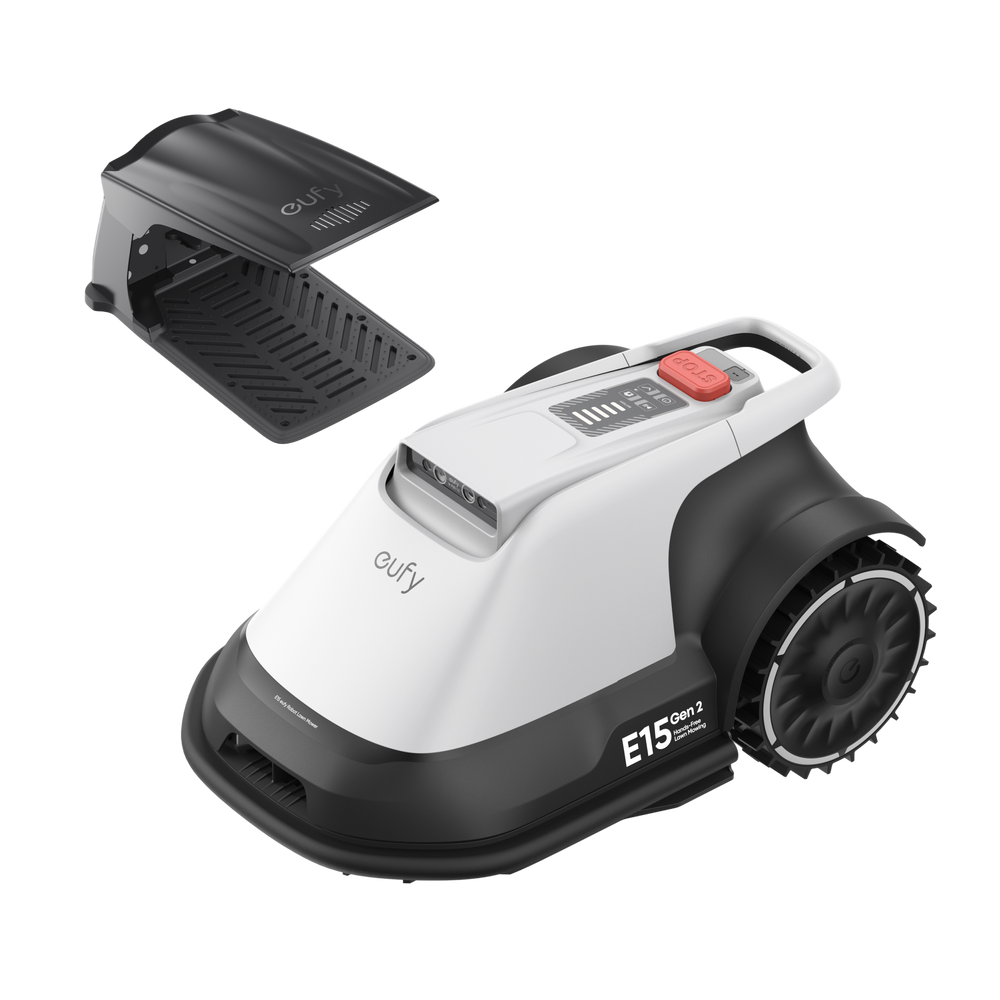
Checked Nov 27 · In stock when checked. Shipping and tax at checkout.
Buy at Lowe’s See all offers & model details ↗We may earn a commission when you buy through these links.
Our recommendations come from published specifications. We may earn a commission from qualifying purchases. As an Amazon Associate, we earn from qualifying purchases. How we work
The quick verdict
Here’s where we’d start.
Treat fallen apples and pine cones as objects to remove, rather than material the mower is assumed to process. The exact H2 and eufy Gen 2 manuals require regular checks for foreign objects and warn about thrown objects. If debris keeps falling faster than the lawn can be cleared, change the operating plan or use supported exclusions. No universal fruit size or obstacle-detection claim establishes safe blade contact.
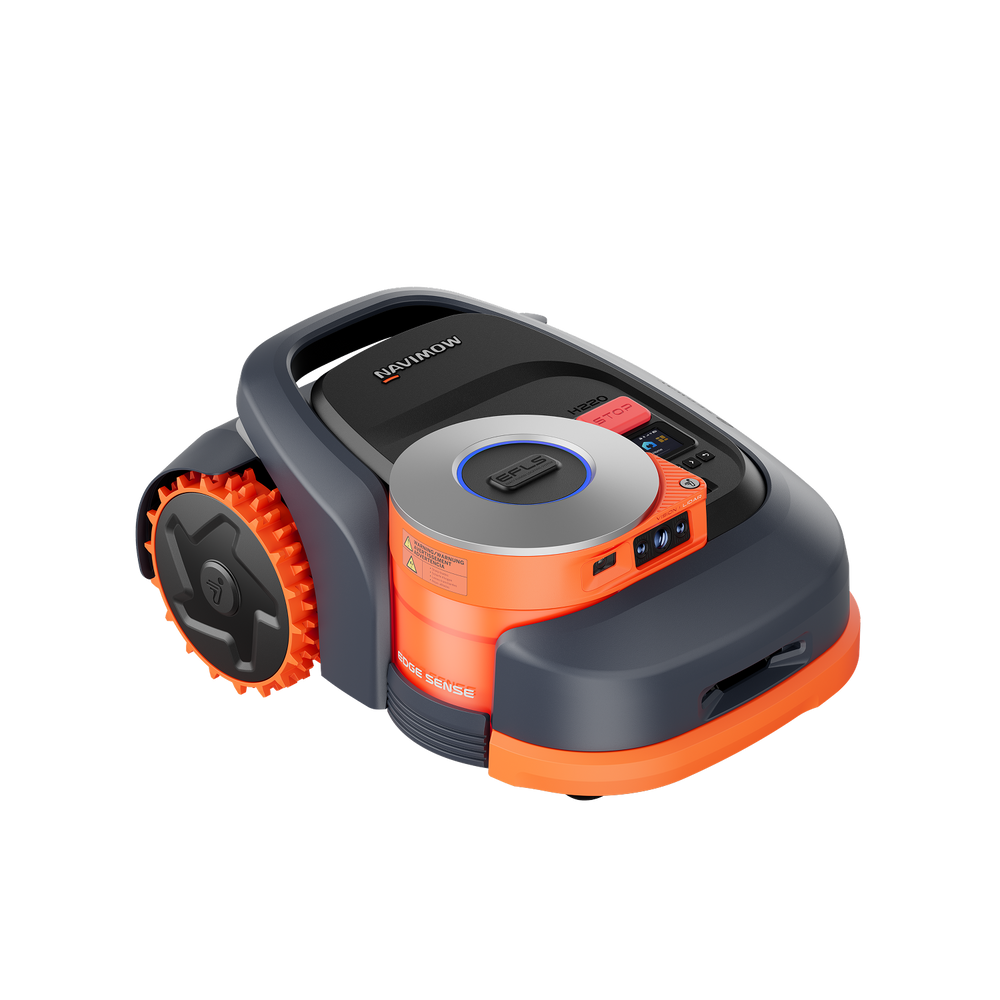
H220
The official H2 manual requires regular removal of stones, sticks and other foreign objects, with powered-off inspection rules.
Its LiDAR and vision obstacle features do not replace that preparation. Follow the complete isolation and handling instructions after contact.
E15 Gen 2
The T280L manual requires clearing foreign objects and objects the machine could throw.
Use Gen 2’s actual shutdown and inspection procedure. Its vision system is not an approval to leave apples, cones or branches in the cutting route.
Pick up the objects before the mower gets there.
Walk the operating area and collect fallen fruit, cones, branches and other loose debris before starting. Check the grass beneath the canopy as well as the open lawn. Do not assume an object is suitable for blade contact because it is natural or came from a tree.
The exact Navimow H220 H2 and eufy E15 Gen 2 manuals require regular removal of stones, sticks, wires, bones and other foreign objects. The fruit-and-cone advice applies that clearance rule; neither manual provides an approved apple size or cone-hardness threshold.
Obstacle avoidance is not a debris-processing specification.
H2 advertises LiDAR and vision obstacle avoidance. Gen 2 uses vision to navigate and identify obstacles. Those features help explain how the machines find their way, but do not establish that every partly hidden or recently fallen object will be detected.
Both manuals still require lawn preparation and warn about thrown objects. Keep people and pets clear under the operating instructions. Our navigation guide separates positioning and detection from the cutting job, while the lawn-preparation guide covers the broader checks.
A clear lawn in the morning can change before a timed run.
Imagine collecting apples at breakfast, with the mower scheduled for late afternoon. Wind brings down more fruit before the timer starts. The earlier inspection no longer establishes that the route is clear when the blades begin turning.
Move the permitted mowing window closer to a fresh clearance check, or pause that work until you can prepare the area. If the drop continues throughout the day, an automatic timer may not suit that patch during the season. This example changes the operating plan without guessing how many objects the mower can tolerate.
Check the whole route when keeping a tree area out.
A supported no-go area may be useful around a recurring drop zone. Confirm that it actually prevents entry and that the mower can still reach its other grass sections and return to the base without crossing the debris.
An area left uncut is not necessarily an area the mower cannot travel through. Use the exact model’s instructions, rather than switch off detection or draw an unverified boundary beside a hazard. Our no-go-zone guide explains the distinction; the separate-lawn guide adds route questions.
Keep hard debris separate from the leaf-mulching discussion.
A few suitable leaves and a pile containing cones or branches are different jobs. Do not use a leaf-mulching description as permission to send woody material or fruit through the cutting assembly. Collect debris that hides other objects before assessing the lawn.
Our fallen-leaf guide covers that separate question. Also check exposed roots and uneven ground around the tree: clearing fruit does not establish ground clearance. The scalping guide explains repeated scraping at a local high point.
Stop and use the exact inspection procedure after a strike.
If the machine hits an object, makes an abnormal noise or signals a fault, stop operation as instructed. Wait for moving parts to stop and complete the model’s shutdown and isolation procedure before checking for damage or a blockage. Do not reach underneath a working mower.
H2 requires power off and an unplugged charging station for damage inspection. Gen 2’s manual separately calls for supply disconnection after striking a foreign object and before relevant owner care. Follow the full procedures, including powered-off handling. Damaged parts or persistent abnormal behavior need service, rather than another trial over the same spot.
If contact produced a new sound or vibration, use our noise diagnostic. The exact shutdown, damage check and authorized next step take precedence over simply buying another set of blades.
Build clearance into the seasonal mowing routine.
Reassess the schedule during fruit drop, after wind and when debris is hard to see in longer grass. Record repeated contact points and any fault messages. The useful question is whether you can keep the actual route prepared, not whether a sensor recognizes a fruit in an advertisement.
Our tree-covered-yard guide adds positioning questions, and the blade-care guide covers exact replacement parts and intervals. Neither a fresh blade set nor a navigation upgrade removes the lawn-clearance requirement.
A closer look
The differences, in view.
Scroll horizontally on smaller screens. Values are manufacturer claims; see each product for qualifiers and original wording.
| Specification | H220 | E15 Gen 2 |
|---|---|---|
| Rated lawn coverage | 0.5 acreRecommended model-specific lawn size, not the expanded mapping allowance. | 0.2471 acresNormalized from 1,000 m² manufacturer coverage claim; not per-charge coverage. |
| Maximum slope | 45 % | Not confirmed |
| Navigation | LiDAR + network RTK + vision | TrueVision camera navigation |
| Maximum slope | Not confirmed | 18 °Visible mower setup FAQ; boundary-slope limit not specified. |
| Boundary setup | Not confirmed | No perimeter wire or RTK stationManufacturer configuration claim, not a guarantee of signal reliability. |
| Connectivity | Not confirmed | Wi-Fi setup; 4G supportedThe page does not establish this generation’s data subscription terms. |
| Cutting height | Not confirmed | 1–3 inE15 Gen2 T280L user guide, section 2.4; not transferred from the original E15. |
Ready to choose?
Your next step, made simple.
Checked Nov 27 · In stock when checked. Shipping and tax at checkout.
Buy at Lowe’s See all offers & model details ↗Checked Nov 27 · In stock when checked. Shipping and tax at checkout.
Buy at Lowe’s See all offers & model details ↗We may earn a commission when you buy through these links.
Show your work
Sources & editorial method.
We reviewed official US product information and exact configurations. Our advice draws on published specifications and model-specific manufacturer instructions, with the practical trade-offs explained. Unknowns and conflicting claims are kept visible. Prices above come from the catalog and may change independently of this article’s review date.
- Navimow official US page — exact model information
- eufy official US page — exact model information
- Official US H2 manual 260202-A — exact cutting specifications, boundaries and owner care
- Official T280L Gen 2 manual — foreign-object clearance and isolation for inspection
Published Nov 9, 2026 · Editorial review Nov 10, 2026.
Read our research standardsKeep exploring
A little more perspective.
Robot mower making an unusual noise or vibrating? Stop and check what changed
A new rattle, scraping sound or vibration needs a closer look before the next scheduled mow. Use the exact shutdown instructions, check the permitted owner-accessible parts and keep damage separate from ordinary blade care.
Read the guideRobot mower scalping your lawn? Check the cut, ground and wheel marks
A pale lawn after a large height change needs a different response from a gouge on the same hump every day. Stop the damage, record where it happens and work through the height, ground and blade checks in that order.
Read the guide