Pool care · 5 min read
Can robotic pool cleaners remove algae? What brushing and filters can do
A robot can help brush surfaces and collect suitable debris, but those jobs do not replace algae treatment and water care. Start by having the problem assessed, then check the exact cleaner, filter and permitted water conditions.
Based on published manufacturer information.
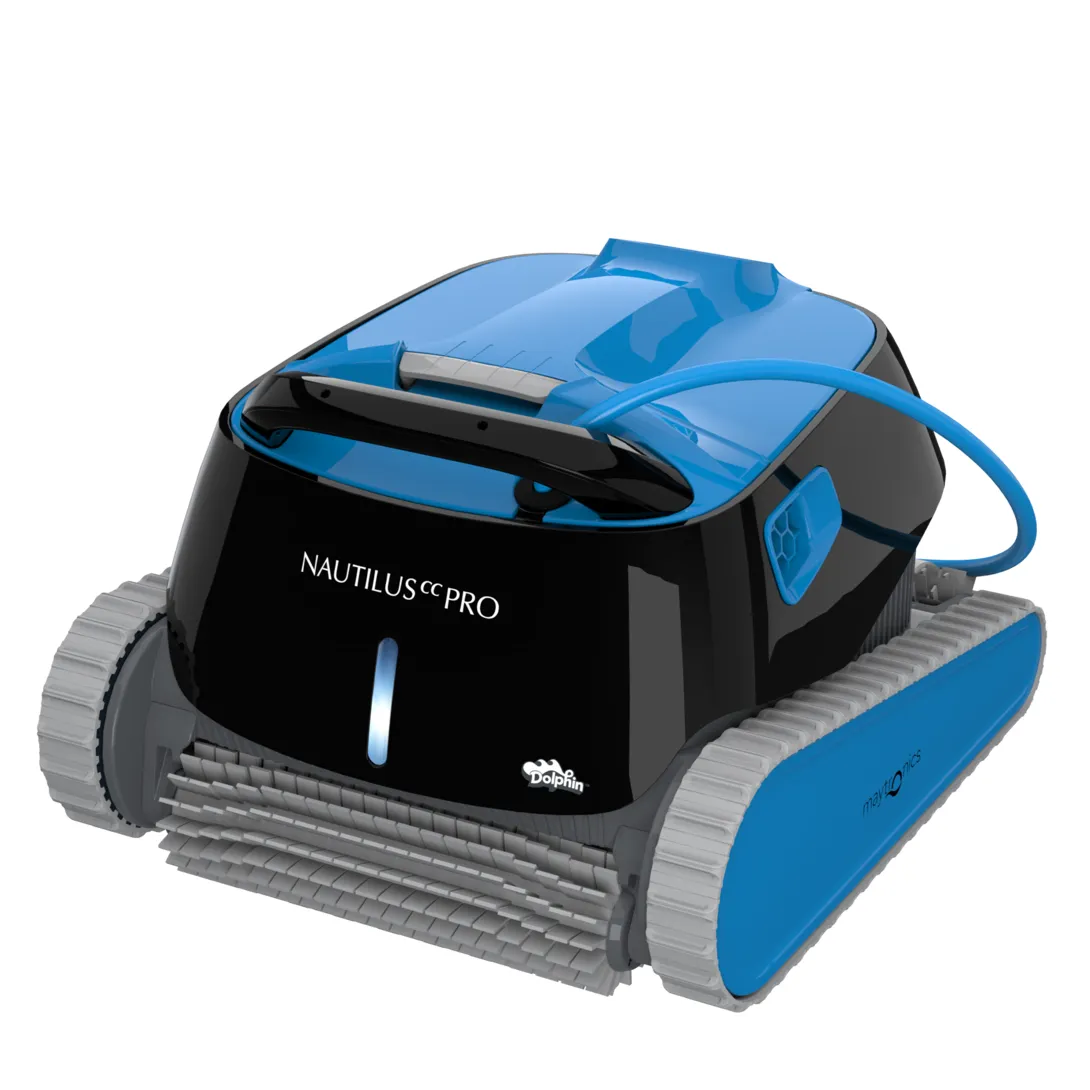
Checked Nov 27 · Price shown is from Dolphin. Check the model, price and availability in Lowe’s search results.
See all offers & model details ↗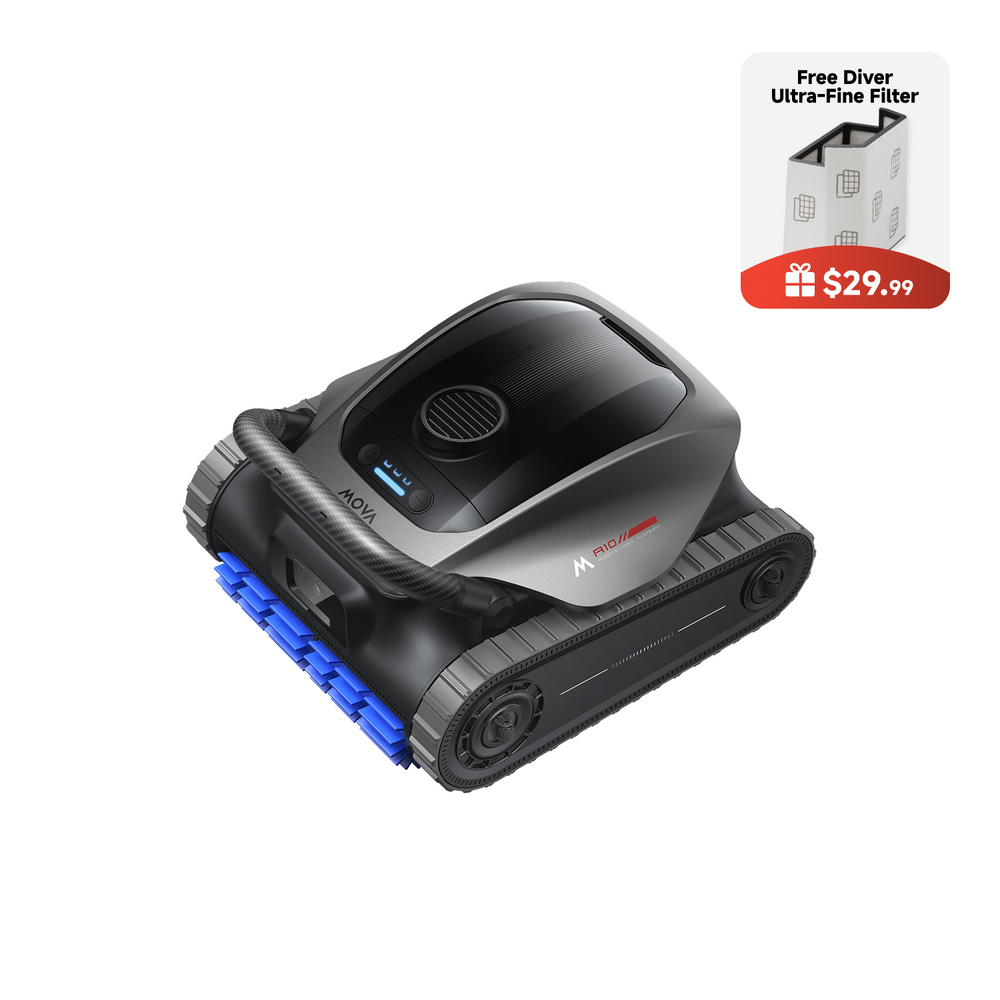
Checked Nov 27 · In stock when checked. Shipping and tax at checkout.
Buy at Lowe’s See all offers & model details ↗We may earn a commission when you buy through these links.
Our recommendations come from published specifications. We may earn a commission from qualifying purchases. As an Amazon Associate, we earn from qualifying purchases. How we work
The quick verdict
Here’s where we’d start.
Use the robot as part of an approved cleaning routine, rather than as the treatment for an algae problem. Have sticky or recurring material assessed and follow the pool-care plan and exact cleaner instructions. Fine-filter descriptions are model-specific: CC Pro’s named Fine Filter Kit is not an assumed two-micron system, and Diver A10’s three-micron description is qualified for low-debris conditions.
Nautilus CC Pro
The exact 99996207-PCI lists floor, wall and waterline scrubbing with a Fine Filter Kit.
Do not transfer a generic Dolphin ultra-fine micron claim or another model’s additional kit to this unit. Confirm approved elements and water conditions.
Diver A10
MOVA describes its replaceable three-micron filter for fine material, including algae, in low-debris environments.
That qualification matters. The claim does not approve a heavy bloom, guarantee complete algae capture or replace the pool’s treatment and main filtration.
Separate material pickup from treating the underlying problem.
Brushing a surface and trapping loosened material are mechanical cleaning jobs. Keeping the water properly treated is another part of pool care. A cleaner finishing its cycle does not establish that an algae problem is resolved or that the pool is ready for swimmers.
Maytronics’ general guidance describes robotic brushing as helping loosen material alongside water treatment. Its troubleshooting advice sends sticky, algae-like debris to a pool technician for assessment. Our robot-versus-main-filter guide explains why the independent robot does not replace the pool’s main system.
Record what you see without diagnosing it from color alone.
Note whether material is attached to a wall, settled on the floor, suspended in the water or returning after cleaning. Photograph it and record recent treatment, filter care and water-test results. A green or dark mark alone does not identify its cause or the correct treatment.
Have persistent, slippery or sticky deposits assessed by the appropriate pool professional. Explain any change in the robot’s wall climbing or pickup as well. Our wall-climbing guide keeps water and surface conditions alongside filter and mechanical checks.
Use the exact model’s filter description.
Dolphin Nautilus CC Pro, part 99996207-PCI, lists a Fine Filter Kit. A generic Dolphin article discussing advanced ultra-fine filtration does not establish that this exact package includes it or supplies the same micron threshold.
MOVA Diver A10 explicitly describes a replaceable three-micron filter for fine particles including algae, with a low-debris qualification and rinsing advice. Treat that as a published use description, not a guarantee to capture every particle. Our fine-filter guide covers approved elements and arrangements.
Light residue and a heavy recurring deposit need different plans.
Imagine the pool professional has addressed the water problem, the cleaner’s operating conditions are met, and a light residue remains. An approved filter and cleaning mode may help collect suitable material. Inspect and care for the basket under the exact instructions, then record what remains.
Now imagine a thick deposit keeps returning and the fine element rapidly loads up. That observation is a reason to reassess the pool-care and debris-removal plan, not simply run longer or fit an improvised finer screen. Diver’s low-debris wording does not establish suitability for this heavier job. The example changes the next check without prescribing a chemical dose.
Follow the treatment plan before returning the cleaner.
Have the machine out of the water during treatment as required by its instructions, and meet the treatment product’s directions and the exact cleaner’s restart conditions together. Do not use a clear appearance, completed robot cycle or a universal waiting period as proof that all conditions are satisfied.
Use the required water measurements and obtain clarification where the manual or treatment instructions are unclear. Our after-shock guide explains that separate restart decision. Have treatment and swimming-return decisions confirmed independently of the robot’s cleaning result.
Our flocculant-and-clarifier guide separates settled treatment debris from ordinary robot collection. Follow the exact label’s removal process and obtain model-specific restart conditions rather than infer approval from clear-looking water.
Check pickup and basket condition together.
A filter needs attention when its condition prevents the cleaner from doing the intended job. Follow the permitted retrieval, shutdown, rinsing and refitting sequence. Confirm replacement elements with the manufacturer rather than substituting mesh or adding an unapproved layer.
Record whether the basket contains material, whether debris appears to escape and whether pickup improves after approved care. Our filter-clogging guide and dirt-pickup guide separate those symptoms without declaring every one an algae fault.
Judge the result over the pool-care routine, not one pass.
If material returns, take the observations and readings back to the pool professional and the cleaner maker as appropriate. Distinguish a recurring water or surface issue from a robot that has a damaged component or an unsuitable filter arrangement.
Our cleaning guide covers ordinary owner care after a permitted cycle. Choose replacement equipment only after the job and approved filter requirements are clear; a stronger suction headline alone does not establish that a different robot will resolve the underlying problem.
A closer look
The differences, in view.
Scroll horizontally on smaller screens. Values are manufacturer claims; see each product for qualifiers and original wording.
| Specification | Nautilus CC Pro | Diver A10 |
|---|---|---|
| Maximum pool length | 50 ft | Not confirmed |
| Filtration | Fine filter basket | Replaceable 3 μm ultra-fine filter |
| Connectivity | MyDolphin Plus app | Not confirmed |
| Rated pool area | Not confirmed | 1900 sq ft |
| Claimed runtime | Not confirmed | 240 minFloor-only; wall/waterline mode is listed at three hours. |
| Debris basket | Not confirmed | 3.5 L |
Ready to choose?
Your next step, made simple.
Checked Nov 27 · Price shown is from Dolphin. Check the model, price and availability in Lowe’s search results.
See all offers & model details ↗Checked Nov 27 · In stock when checked. Shipping and tax at checkout.
Buy at Lowe’s See all offers & model details ↗We may earn a commission when you buy through these links.
Show your work
Sources & editorial method.
We reviewed official US product information and exact configurations. Our advice draws on published specifications and model-specific manufacturer instructions, with the practical trade-offs explained. Unknowns and conflicting claims are kept visible. Prices above come from the catalog and may change independently of this article’s review date.
- Dolphin official US page — exact model information
- MOVA official US page — exact model information
- Maytronics general explanation — mechanical brushing alongside water treatment
- Maytronics official troubleshooting — sticky algae-like debris, filter suitability and care
Published Nov 9, 2026 · Editorial review Nov 10, 2026.
Read our research standardsKeep exploring
A little more perspective.
Does a robotic pool cleaner replace the pool filter? Plan for both jobs
A robot collects debris in its own basket, which can reduce the manual cleaning chore. The pool still needs its normal circulation, filtration and water-care routine. Here is how to decide which problem you actually need to solve.
Read the guide
Pool-cleaner filter clogging quickly? Match the filter to the debris before replacing the robot
A full basket, a loaded fine-filter layer and a poorly seated element need different responses. Check what is collecting, follow the exact filter arrangement and change one thing at a time.
Read the guide