Pool care · 5 min read
When can you use a robotic pool cleaner after shocking the pool?
Do not restart the robot just because the water looks clear or a night has passed. Check the treatment label and the exact cleaner’s permitted water conditions, then test the water using the required method.
Based on published manufacturer information.
Checked Nov 27 · In stock when checked. Shipping and tax at checkout.
No current brand offer. Explore Amazon options.
We may earn a commission when you buy through these links.
Our recommendations come from published specifications. We may earn a commission from qualifying purchases. As an Amazon Associate, we earn from qualifying purchases. How we work
The quick verdict
Here’s where we’d start.
Keep the cleaner out during treatment as its instructions require, and restart only when the treatment directions and every applicable cleaner condition are met. Dreame’s Z1/Z1 Pro FAQ lists chlorine at or below 4 ppm and salt at or below 5,000 ppm; that is an example for those models, not a universal robot or swimming threshold. If a required measurement or limit is unclear, get it clarified before returning the unit to the water.
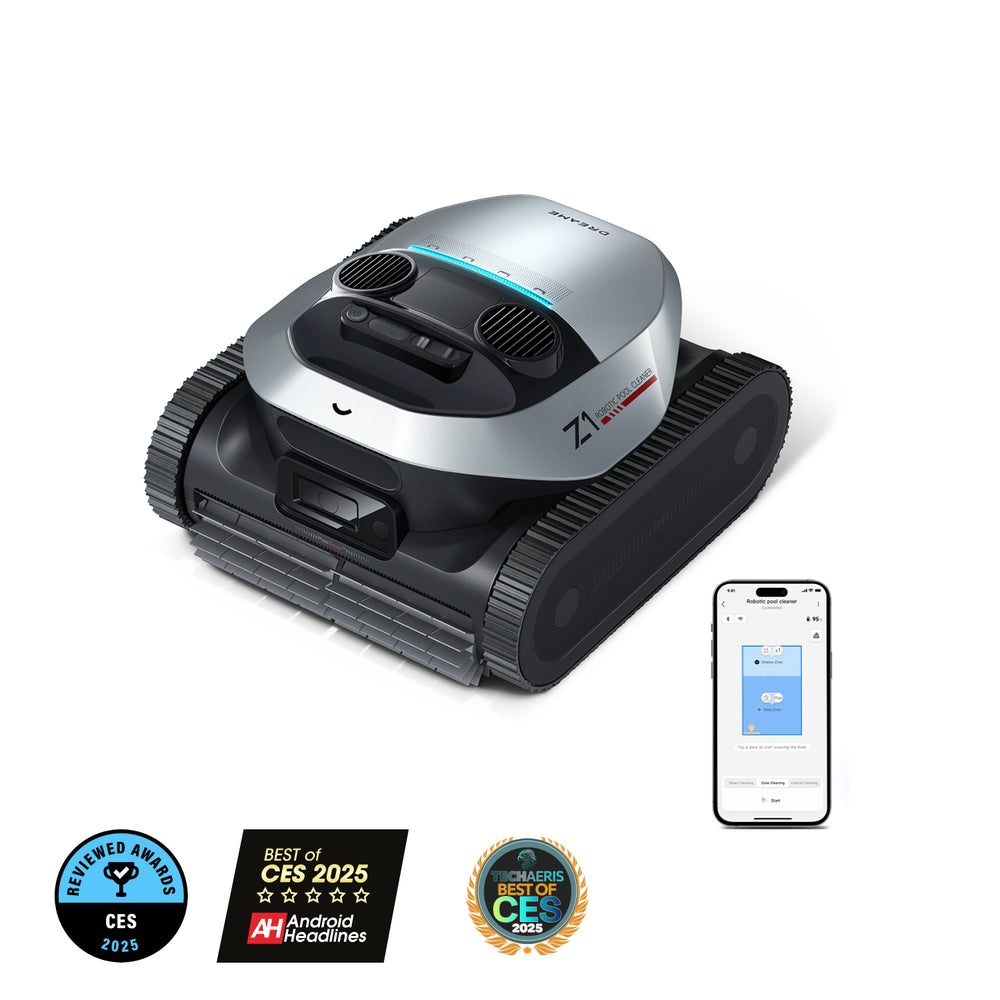
Z1
Dreame’s Z1/Z1 Pro FAQ lists limits for chlorine, salt and operating water temperature.
The chlorine entry does not define free versus total chlorine. Confirm the required measurement and the complete current instructions; elapsed time is not a substitute.
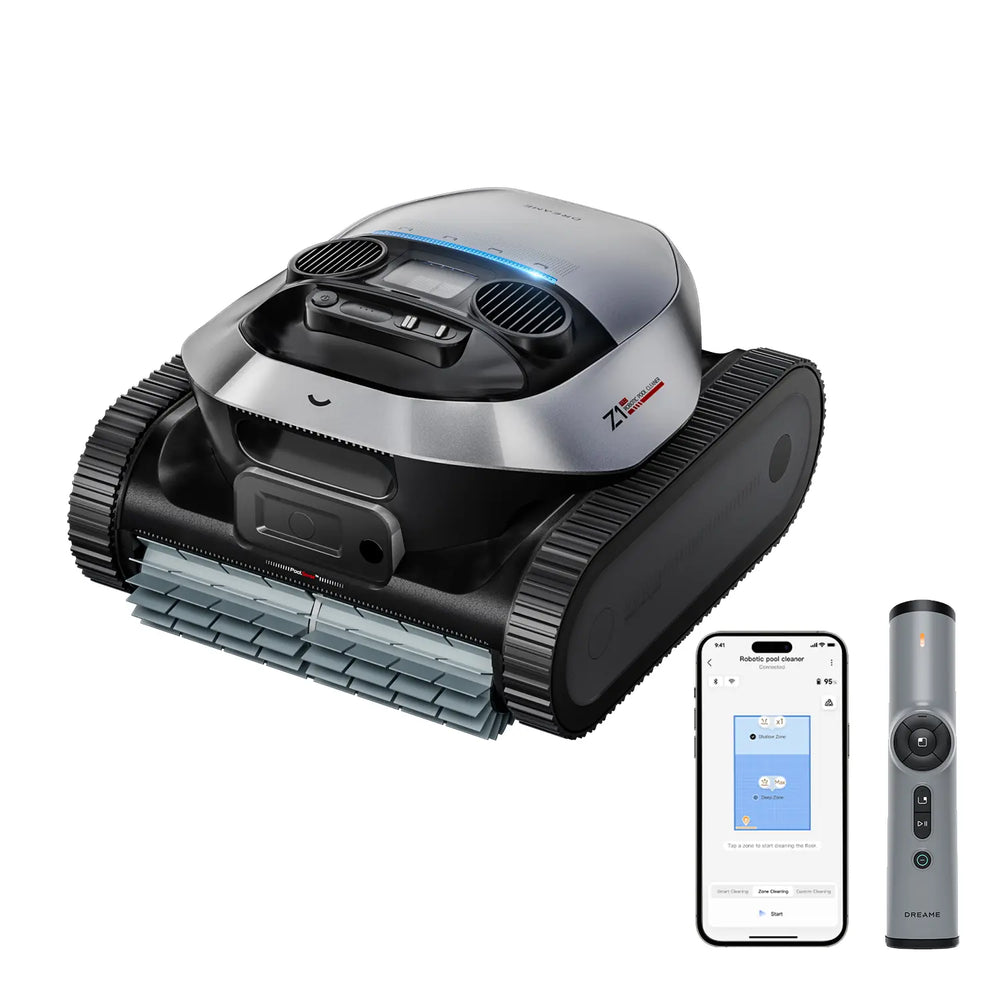
Z1 Pro
The same exact-family FAQ says to remove the cleaner after use, rinse it, empty the basket and store it dry.
A permitted chlorine reading alone does not approve a treatment still in progress, other unsuitable chemistry or use by swimmers.
Remove the cleaner before the treatment begins.
Plan the treatment with the robot safely out of the water, following its retrieval and shutdown instructions. Do not use the robot to distribute the treatment. Keep its cable, charging equipment and stored parts away from chemical handling under the relevant instructions.
The official Polaris manual linked from VRX iQ+ explicitly says to keep that cleaner out during chemical treatments. Apply the complete instructions for your own machine too. Our leaving-a-cleaner-in-the-pool guide separates ordinary cleaning or approved scheduling from treatment and storage.
Read the treatment directions and the cleaner’s requirements together.
The product used to treat the water and the machine entering it answer different questions. Follow the treatment label, including any circulation and return conditions, and obtain the cleaner’s exact permitted water conditions. Do not assume that clear water establishes either one.
This is a restart check, rather than a chemical-dosing guide. If the treatment or water condition needs assessment, use the treatment supplier or a qualified pool professional. Our first-use guide helps organize the separate robot setup and operating checks.
If flocculant or clarifier was also added, read our treatment-compatibility guide. A completed shock-treatment wait does not answer a separate exact-model restriction on those substances.
Our new-plaster guide adds the finish-startup requirements when resurfacing is recent. A treatment restart decision does not independently authorize robot traffic on a new surface.
Keep any chemical limit attached to the model that states it.
For Dreame Z1 and Z1 Pro, Dreame’s current family FAQ lists salt at or below 5,000 ppm and chlorine at or below 4 ppm. Those figures do not become the permitted chemistry for Dolphin, Polaris, Beatbot or another Dreame family.
The FAQ calls the second measurement chlorine without specifying free or total chlorine. Confirm the intended test and complete requirements with Dreame; do not silently relabel it. Its recommended water temperature is 41–95°F. Our saltwater guide explains why salinity and chlorine need separate attention.
A night of waiting does not overrule a failed reading.
Imagine a Z1 owner who has confirmed the appropriate measurement and tests 6 ppm chlorine the morning after treatment. That exceeds the FAQ’s 4 ppm ceiling. The elapsed night and clear appearance do not make that a passing check.
If a later, valid reading is 3 ppm, that one numerical check passes. The treatment directions, other applicable water limits and operating conditions still need to be satisfied. These illustrative readings show how to use a ceiling; they do not predict how quickly chlorine changes or prescribe a dose or waiting period.
Keep water treatment separate from debris pickup.
A robot collecting material from the floor does not replace the pool’s treatment and main filtration routine. Follow the pool system’s instructions and any professional advice about material left after treatment. Do not assume a standard robot basket is suitable for every fine residue or treatment additive.
Before choosing a filter or mode, check the cleaner’s approved elements and care instructions. Our robot-versus-main-filter guide and fine-filter guide keep those different jobs and assemblies clear.
Our robotic-cleaner-and-algae guide separates brushing and suitable residue pickup from treating the underlying problem. A fine-filter description does not approve heavy recurring deposits.
Our heavy-rain guide adds the weather, site and debris assessment when treatment followed a storm. Clear-looking water alone cannot settle the complete restart decision.
Return it only when the full set of conditions is satisfied.
Once the treatment directions and exact cleaner conditions are met, inspect and prepare the unit under its normal instructions. Check that the basket and other owner-removable parts are correctly fitted. Operate only under the model’s rules for pool access and people in the water.
Observe the first permitted cycle from a safe position. Unexpected behavior, visible damage or an unsuitable water reading is a reason to stop and seek the appropriate advice. Approval to operate a cleaner is not approval to swim. Our swimming-with-a-cleaner guide covers that separate question.
If treatment is part of reopening the pool, use the spring-opening guide to place it in the wider cleanup sequence. A passing chlorine reading still leaves temperature, depth and the other operating conditions to check.
Finish with the exact after-use care routine.
Dreame’s Z1/Z1 Pro FAQ calls for rinsing after use, removal after each use, an emptied basket and dry storage. Follow the full cleaning and charging instructions, including component-specific drying requirements. Those steps do not make exposure outside the stated limits acceptable.
If the cleaner was left in during treatment, remove it using the supported method and contact the maker with the model, treatment, available readings, exposure time and observed symptoms. Do not promise that a rinse repairs damage. Our cleaning guide helps identify ordinary care separately from a service issue.
A closer look
The differences, in view.
Scroll horizontally on smaller screens. Values are manufacturer claims; see each product for qualifiers and original wording.
| Specification | Z1 | Z1 Pro |
|---|---|---|
| Rated pool area | 1950 sq ftManufacturer maximum; pool geometry and conditions still matter. | 2160 sq ftManufacturer maximum; pool geometry and conditions still matter. |
| Navigation | Ultrasound + 3D structured light | PoolSense navigation |
| Remote control | No LiFi handheld remote | LiFi-enabled handheld remote |
| Retrieval | Not confirmed | Automatic waterline parking |
Ready to choose?
Your next step, made simple.
Checked Nov 27 · In stock when checked. Shipping and tax at checkout.
No current brand offer. Explore Amazon options.
We may earn a commission when you buy through these links.
Show your work
Sources & editorial method.
We reviewed official US product information and exact configurations. Our advice draws on published specifications and model-specific manufacturer instructions, with the practical trade-offs explained. Unknowns and conflicting claims are kept visible. Prices above come from the catalog and may change independently of this article’s review date.
- Dreame official US page — exact model information
- Dreame official US page — exact model information
- Dreame exact Z1/Z1 Pro FAQ — water limits and after-use care
- Polaris official VRX iQ+ family manual — chemical treatment and owner care
Published Nov 9, 2026 · Editorial review Nov 12, 2026.
Read our research standardsKeep exploring
A little more perspective.
Can you run a robotic pool cleaner after flocculant? Check the exact instructions
Settled treatment debris can look like an easy job for a robot, but the cleaner’s own restrictions still apply. Check the exact treatment, collection method and manufacturer restart conditions before putting the robot back in.
Read the guideRobot pool cleaner after heavy rain: Check the pool before restarting
The rain stopping is only the first check. Floating leaves, settled dirt, changed water conditions and any storm damage need different responses. Review the actual pool and the cleaner’s exact instructions before restoring its timer.
Read the guide