Troubleshooting · 6 min read
Robot mower leaving wheel tracks? Diagnose the route before changing the machine
Start by separating a visible mowing pattern from torn grass or a groove in the soil. Then find whether the wear comes from repeated mowing rows, a turning point or the one route back to charge.
Based on published manufacturer information.
No current brand offer. Explore Amazon options.
No current brand offer. Explore Amazon options.
We may earn a commission when you buy through these links.
Our recommendations come from published specifications. We may earn a commission from qualifying purchases. As an Amazon Associate, we earn from qualifying purchases. How we work
The quick verdict
Here’s where we’d start.
Stop repeated runs over torn or soft ground, identify where the wheels travel, and change one supported setting or route at a time. Alternating mowing direction can address repeated rows, but it cannot widen a narrow charger approach or repair poor drainage. Keep exact-model instructions and capacity limits beside any pattern change.
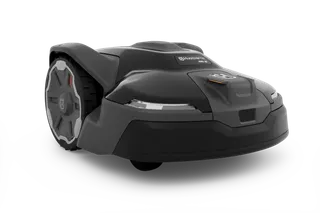
Automower 420 iQ
420 iQ illustrates why changing the mowing pattern also changes the workload check: one acre systematic versus half an acre irregular.
It is a reference for the diagnosis, not a guarantee against lawn wear. Confirm supported settings and the installation before changing patterns.
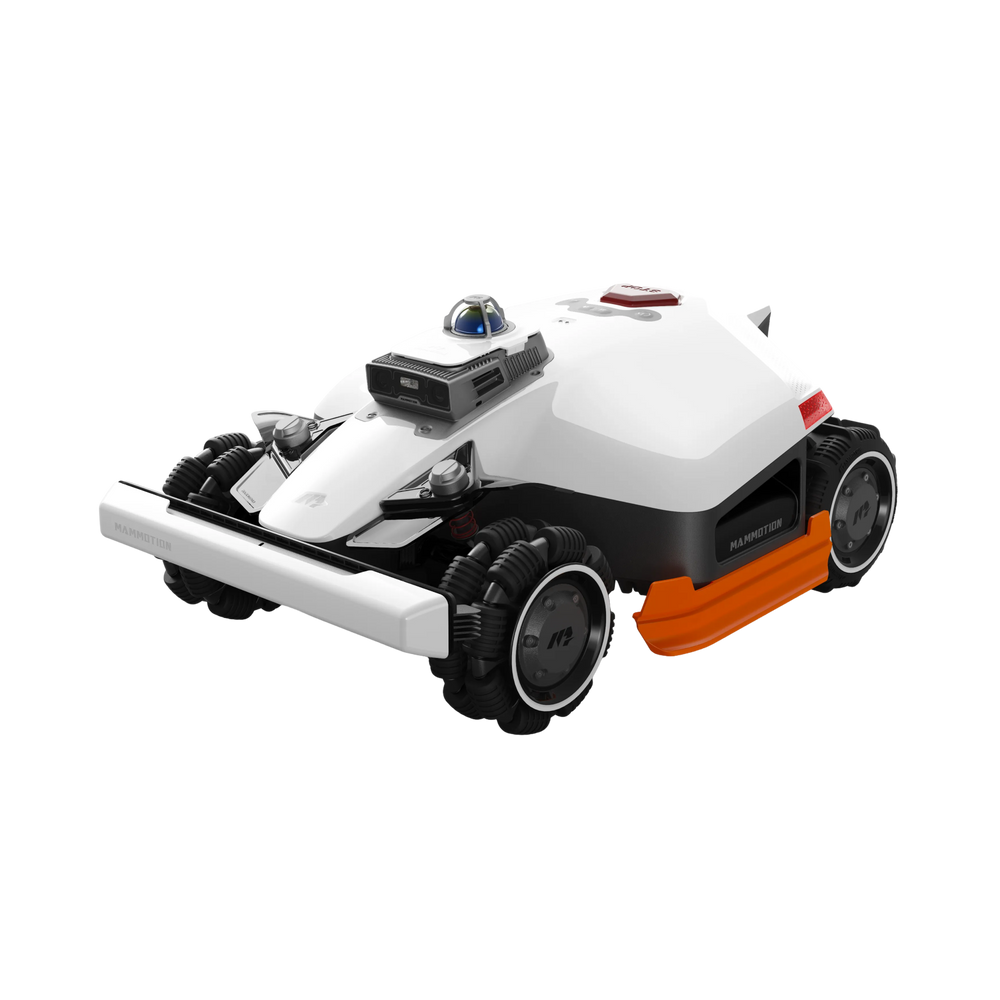
LUBA 3 AWD 3000H
LUBA 3000H illustrates why AWD, a wider cut and a mapped lawn do not remove the need to assess turning points and repeated routes.
Use the exact model’s current instructions. A support menu for another Mammotion family is not evidence that the same controls exist on this one.
First establish what is marked: the grass or the soil.
A light-and-dark mowing pattern alone does not prove a rut. With the mower stopped, look for a depressed wheel path, torn turf, exposed soil or a repeated scraped turning spot. Photograph the area from the same position so you can judge whether it is worsening rather than relying on one view of the stripes.
Also look at the leaf tips. University of Maryland Extension distinguishes tire ruts and compaction from scalping and damage caused by dull blades. A brown patch over a raised mound may need a cutting-height or ground assessment rather than a navigation setting. Our height guide covers the cutting question.
Our scalping guide helps distinguish pressed-down wheel paths from grass actually removed at a crest. Record the mark and location before changing several settings at once.
Find which part of the task produces the wear.
Observe a normal run from a safe distance, keeping people and pets clear as the manual requires. Note whether the mark occurs in long mowing rows, at each row-end turn, around an island, through a passage or on the final charger approach. Record whether it happens during mowing, transport or repeated docking attempts.
That distinction matters because these movements may use different settings. A lawn-wide angle change may move the mowing rows while leaving the same narrow return path untouched. Our docking guide and passage guide cover those route problems.
Treat wet or damaged ground as a condition to resolve.
Maryland Extension explains that wet soil compacts more readily and repeated mower paths can form ruts. If a wheel path is soft, torn or collecting water, pause repeated traffic there and assess drainage and irrigation timing. Repeatedly sending the robot back to prove it can climb out is not a useful diagnostic test.
Check whether the problem follows rain or watering, or appears in the same dry location too. Keep that observation with the route photos. Our rain guide explains why water resistance and permission to mow are different questions; the machine’s ability to keep moving does not establish that the turf is ready for traffic.
Our slope-measuring guide helps label the ground where traffic concentrates. Inclination, local grip and repeated turning are different observations to include in an installer’s assessment.
For hot, dry conditions, read can a robot mower work in hot weather. It separates regional dormant-lawn guidance from the mower’s own operating and charging limits.
For recently seeded areas, our overseeding guide separates the need to maintain existing grass from permission to send repeated robot traffic over the new growth. A calendar date alone does not establish that fit.
Our new-sod guide works through patches laid on the same date that have different rooting or firmness. Repeated turns and the charger approach belong in the establishment assessment.
Our robot-mower-after-aeration guide checks a firm open lawn beside a still-soft charger approach. The shared work date does not establish that every repeated route is ready.
Our frosty-grass guide checks a thawing charger approach even after visible frost has gone. The absence of white grass does not independently establish firm ground for repeated traffic.
Change one supported setting, then observe the same route.
For wear that follows repeated mowing rows, investigate the exact model’s supported pattern or direction controls. For a scraped row-end turn, show support the turn itself and the space around it. For a single worn return lane, review the permitted transport route and station approach. Do not widen a boundary toward a road, pond or drop to make room.
Husqvarna’s boundary-wire corridor guidance describes varying the travel distance from the wire to reduce tracks, with adjustments depending on the model. That is useful evidence that return traffic matters; it is not a menu instruction for a wire-free iQ installation or a different brand. Changing several controls at once makes the cause harder to isolate.
A pattern change can alter the mower’s capacity allowance.
Automower 420 iQ lists one acre systematic and half an acre irregular. On a hypothetical 0.8-acre lawn, switching the whole area to irregular mowing would move beyond that smaller rating. A pattern change therefore needs a workload check, rather than being treated as a purely cosmetic adjustment.
LUBA 3 AWD 3000H is a different AWD example. Check the current controls and firmware for that exact machine instead of copying a turning or path setting from another LUBA generation or a YUKA support page. Our mowing-frequency guide helps assess time and repeated traffic together.
A bare patch at the charger calls for a different experiment.
Imagine a lawn whose main mowing rows look healthy, but the last few feet before the dock have two worn lines and a scraped turn. Changing the angle across the main lawn is unlikely to spread that concentrated charger traffic. First check the approved approach, level ground, nearby obstructions and whether the robot is making repeated unsuccessful returns.
After a supported route or placement change, compare normal returns and take another photo under similar conditions. You are looking for fewer repeated maneuvers and no fresh tearing, not expecting damaged turf to recover immediately. Our station-placement guide explains the installation checks to make before moving the base.
Resolve the cause before repairing the mark.
Inspect wheels and the mower only after stopping and isolating it as the manual instructs, then follow its approved cleaning procedure. A persistent traction, wheel or docking fault needs model-specific support. Do not improvise weights, wheel modifications or sensor changes to force the mower through the same spot.
For soil repair, identify buried boundary wires, irrigation and other services before aeration or ground work. Persistent depressions or drainage problems deserve a lawn assessment. Our mower-care guide covers permitted machine care; a new mowing pattern cannot reverse soil compaction by itself.
Give support evidence that distinguishes the possible causes.
Send the exact model, app and firmware versions, a route sketch, photos before and after normal operation, the ground conditions and a short recording of the problematic maneuver. Include whether the mark follows mowing, turning, transport or docking, plus the one change you tried and its result.
We would work through that evidence before replacing the mower for a higher slope rating or another navigation label. If the route remains unsuitable under the manufacturer’s installation rules, excluding or maintaining that small section separately may be the more workable solution. The stuck-mower guide covers repeated immobilization as a separate symptom.
A closer look
The differences, in view.
Scroll horizontally on smaller screens. Values are manufacturer claims; see each product for qualifiers and original wording.
| Specification | Automower 420 iQ | LUBA 3 AWD 3000H |
|---|---|---|
| Rated lawn coverage | 1 acreSystematic mowing only; irregular mowing has a smaller area rating. | 0.75 acreExact US high-height variant rating, not mowing area per charge. |
| Irregular mowing coverage | 0.5 acre | Not confirmed |
| Maximum slope | 45 %Manufacturer maximum inside the mowing area. Boundary limits, traction and installation conditions can be stricter. | 80 %Maximum climbing claim for the mowing area; a separate boundary-slope limit is not established in the saved source. |
| Boundary slope limit | 15 % | Not confirmed |
| Cutting height | 1–4 in | 2.2–4.0 inHigh Version / H variant; the standard model has a different cutting range. |
| Navigation | EPOS satellite positioning | 360° LiDAR + NetRTK + dual-camera AI vision |
| Connectivity | Automower Connect | Built-in 4G |
Ready to choose?
Your next step, made simple.
No current brand offer. Explore Amazon options.
No current brand offer. Explore Amazon options.
We may earn a commission when you buy through these links.
Show your work
Sources & editorial method.
We reviewed official US product information and exact configurations. Our advice draws on published specifications and model-specific manufacturer instructions, with the practical trade-offs explained. Unknowns and conflicting claims are kept visible. Prices above come from the catalog and may change independently of this article’s review date.
- Official US manufacturer page — exact model, specifications and qualifications
- Official US manufacturer page — exact model, specifications and qualifications
- University of Maryland Extension — tire ruts, wet soil, compaction and cutting damage
- University of Maryland Extension — established lawn care and mowing conditions
- Husqvarna US support — model-dependent boundary-wire corridor behavior
Published Nov 6, 2026 · Editorial review Nov 10, 2026.
Read our research standardsKeep exploring
A little more perspective.


Can a robot mower work in hot weather? Check the lawn and the machine separately
A mower can be within its operating range while the grass needs a break. Start with whether the lawn is growing, then check the exact working conditions, charging limits and schedule.
Read the guide

Can Robot Mowers Mow in the Rain?
Weather resistance doesn't tell you whether the mower should keep cutting a wet lawn. We'd check the exact rain-sensor behavior and manual, then plan around the condition of the grass and ground. These examples return home when rain is detected.
Read the guide