Troubleshooting guide · 5 min read
Why Does My Robotic Pool Cleaner Keep Stopping?
Watch what happens when it stops before assuming the battery or motor has failed. Finishing a task, parking on low battery, getting trapped and stopping with an alert need different answers. We'd save the message and check the selected job, basket and location one step at a time.
Based on published manufacturer information.
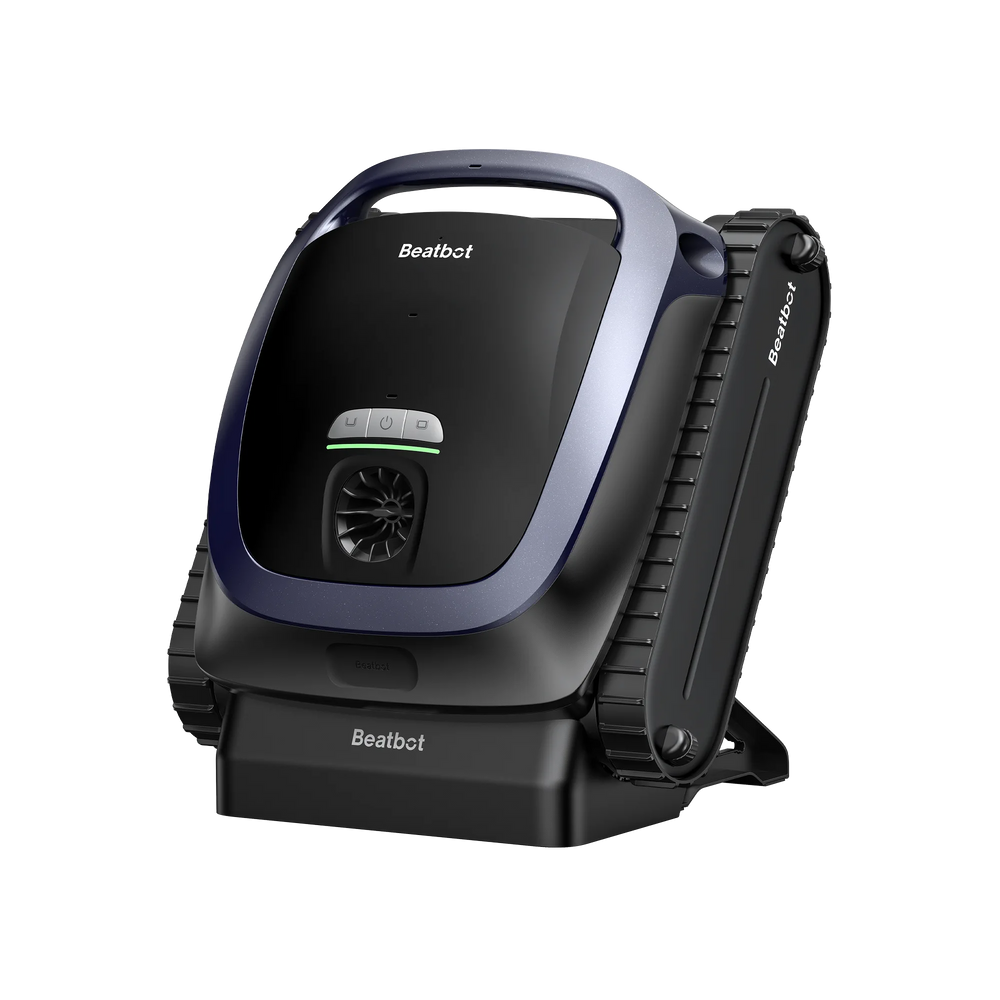
No current brand offer. Explore Amazon options.
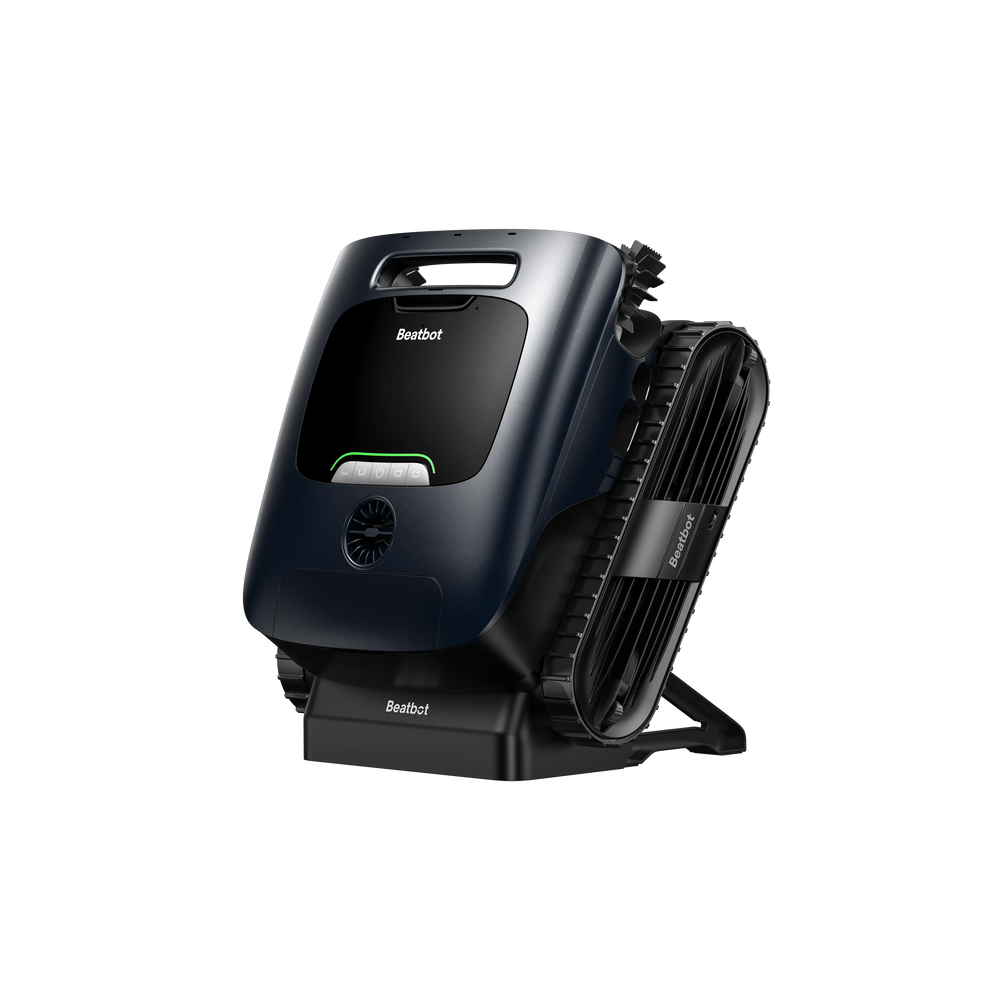
Checked Nov 27 · In stock when checked. Shipping and tax at checkout.
Buy at Lowe’s See all offers & model details ↗We may earn a commission when you buy through these links.
Our recommendations come from published specifications. We may earn a commission from qualifying purchases. As an Amazon Associate, we earn from qualifying purchases. How we work
The quick verdict
Here’s where we’d start.
First separate an ordinary completed task or low-battery return from an unexpected stop. Retrieve and shut down using the exact model's instructions, then complete its approved basket and visible-obstruction checks. Beatbot's AquaSense 2 and 2 Ultra support sections identify clogging, entanglement and getting stuck as factors affecting work and battery use. Keep the error and location, and ask support if approved care doesn't resolve it. Another model's reset or disassembly procedure is not a universal fix.
AquaSense 2
AquaSense 2 documents surface parking after completion or low battery, with model-specific clogging and obstruction support.
Surface parking is not surface cleaning. Use the exact A200/AquaSense 2 instructions and preserve the alert.
AquaSense 2 Ultra
The exact Ultra support section connects basket clogging and getting stuck with increased power use.
Keep its instructions separate from AquaSense X, Pro or other generations; avoid undocumented resets or repairs.
Write down what the stop looks like.
Note the selected mode, elapsed time, battery reading, location and any app alert. Does the robot park at the surface, remain still at the bottom, struggle at the same feature, or shut down unexpectedly? A short video and the exact message are more useful than repeatedly restarting without keeping the result.
If the session is marked complete, check the intended task before treating it as a fault. Our cleaning-frequency guide explains why maximum endurance and a selected session length aren't necessarily the same thing.
On a first run, our setup guide helps check the chosen mode and documented launch procedure before a normal app or operating-state change becomes a fault diagnosis.
If the cleaner never begins a pass, use the startup guide to check whether it has power and has reached the point where its drive should engage.
Parking after the job or on low battery can be normal.
Beatbot AquaSense 2 describes automatic surface parking when cleaning is complete or the battery is low. Reaching that pickup state is different from an unexplained motor stop. Its floor, wall and waterline jobs also do not make it a floating-leaf skimmer.
Check the exact task and state shown for your cleaner, then follow its pickup and charging routine. Our retrieval guide explains the handling questions, and skimmers versus underwater cleaners separates those different jobs.
For a robot that reaches the edge without apparently scrubbing, our waterline-cleaning guide checks whether it is parking normally or performing the intended task before extending the schedule.
When the robot finishes but cannot surface or present its handle, use the pool-edge return guide to distinguish a failed pickup position from an ordinary cleaning pause.
Start with the approved basket and visible checks.
Beatbot's exact AquaSense 2 and 2 Ultra support sections describe clogged or incorrectly installed baskets and alerts about entangled rollers or tracks. Retrieve and power down as the manual directs before the permitted owner checks. Empty, clean and refit the required basket correctly; do not test the robot without it.
Use only the model's approved obstruction-removal steps. If a message persists after correct assembly and routine care, keep it for support rather than open sealed equipment. Our cleaner-care guide and dirt-pickup guide cover the related symptoms.
For apparent roller trouble, use our brush-motion guide. The exact Z1 and Pro manuals distinguish their floor-landing activation condition from powered-off roller care and entanglement checks.
Our unusual-noise guide separates an accessible debris obstruction from grinding that remains after approved care. Repeated noisy runs are not a way to establish that the cleaner is safe to continue using.
A shorter run doesn’t prove a failed battery.
For AquaSense 2 Ultra, Beatbot lists the entry point, path, pool cleanliness, basket clogging and abnormalities such as getting stuck among factors affecting energy use. The AquaSense 2 section gives similar model-specific guidance. Headline endurance isn't a guaranteed time in every mode or pool.
After the approved basket care, the support guidance calls for a full charge and a new cleaning cycle. Follow that exact model's charging and handling instructions, then note the result. Don't borrow an AquaSense X self-cleaning-station procedure or a reset sequence from a different family.
If the robot never accepts a charge, use our charging troubleshooting guide for that separate symptom before treating a short run and a charger fault as the same problem.
If the task completes but parts of the pool remain dirty, our missed-area guide covers that different symptom, including the mode and exact-model path-planning behavior.
When cooler weather is involved, our cold-water guide helps compare the water reading with the exact model’s operating limits before adding more cycles.
Our short-runtime guide compares a normally completed shorter routine with repeated early stops under equivalent conditions. Neither observation alone measures remaining battery capacity.
If it stops in the same place, send that feature to support.
Record whether the problem repeats on a drain, step, shelf or awkward transition. A general wall-cleaning claim doesn't establish that every feature is accessible. Ask the maker to assess its dimensions and the permitted operating conditions rather than force repeated attempts at an unsuitable spot.
Our steps and sun-shelf guide and wall-climbing guide explain those separate limitations. Keep the pool's normal circulation and water-care questions with the appropriate manufacturer or service advice; a stopping symptom alone doesn't establish a chemical or pump fix.
When the same stopping place is a step or sun shelf, our step-trapping guide explains the dimensions, transition photos and mode details to send support, with safe retrieval before inspection.
If the stop involves floating or a tilted body, our floating-or-tilting guide explains what timing, basket and geometry details to record, with model-specific care rather than a universal fix.
For a cleaner that stops over the same drain cover, use the drain guide to check circulation and the cover condition before investigating the drive.
Send a useful record before deciding to replace it.
Give support the full model, serial number, selected mode, alerts, battery readings, photos or video, and approved care already completed. Explain whether the stop is at the same time or location and whether the cleaner resumes normally after its approved charging routine. Upload logs through the manufacturer's supported process when requested.
We'd settle that service question before assuming a larger battery or more expensive robot is the answer. Our Beatbot buying guide helps if the current cleaner later proves unsuitable for the job, while leaving a cleaner in the pool explains why a stopped robot still needs the correct care routine.
If the concern began with an offline app status, our pool-cleaner Wi-Fi guide explains why that status alone does not prove cleaning stopped, and which exact onboard, notification and pickup instructions to check.
When the concern is an offline app rather than a confirmed physical stop, our Wi-Fi connection guide separates failed pairing from underwater communication limits and records the actual failed stage.
If a swim is planned, a stopped or offline message does not replace the handling procedure. Our swimming and cleaner-operation guide explains the separate cleaning window and approved poolside retrieval.
If the stop followed a remote command or the handset seems dead, use the remote checklist to separate pause state, automatic handset shutdown and overheating protection.
A closer look
The differences, in view.
Scroll horizontally on smaller screens. Values are manufacturer claims; see each product for qualifiers and original wording.
| Specification | AquaSense 2 | AquaSense 2 Ultra |
|---|---|---|
| Cleaning coverage | Floor, walls, waterline | Floor, walls, waterline, surface |
| Claimed runtime | 240 minUp to; continuous floor-only cleaning. Manufacturer claim, not a mixed-mode test. | 300 minUp to; floor-only cleaning. Separate claims: up to 10 hours surface-only and 4.5 hours walls + waterline. |
| Rated pool area | 3230 sq ftRecommended pool bottom area, not a measured cleaning result. | Not confirmed |
| Filtration | 150 μmLayer count conflicts elsewhere in the source; 150 μm is the stated particle rating. | 150 + 250 μm dual-layerThe source says particles as small as 150 μm; no finer filtration is implied. |
| Charging | Wireless dock; approximately 4 hours | Approximately 4.5 hours |
| Navigation | CleverNav + SonicSense ultrasonic navigation | HybridSense AI + CleverNav |
| Pool surfaces | Not confirmed | Concrete, vinyl, fiberglass, ceramic tile, stainless steel |
Ready to choose?
Your next step, made simple.
No current brand offer. Explore Amazon options.
Checked Nov 27 · In stock when checked. Shipping and tax at checkout.
Buy at Lowe’s See all offers & model details ↗We may earn a commission when you buy through these links.
Show your work
Sources & editorial method.
We reviewed official US product information and exact configurations. Our advice draws on published specifications and model-specific manufacturer instructions, with the practical trade-offs explained. Unknowns and conflicting claims are kept visible. Prices above come from the catalog and may change independently of this article’s review date.
- Beatbot AquaSense 2 — floor/wall/waterline cleaning and completion/low-battery parking
- Beatbot AquaSense 2 Ultra — cleaning jobs, parking and model-specific operating scope
- Beatbot US help center — exact AquaSense 2/A200 and AquaSense 2 Ultra/A200 Ultra task, basket, obstruction, battery and support guidance
Published Nov 2, 2026 · Editorial review Nov 25, 2026.
Read our research standardsKeep exploring
A little more perspective.
Can You Swim While a Robotic Pool Cleaner Is Running?
We'd give swimming and robot cleaning separate times. The AquaSense 2 and AquaSense 2 Ultra manuals explicitly tell owners to keep people out of the pool while the robot works. Cordless power and obstacle detection don't change those instructions. Plan the clean and poolside retrieval before anyone gets in.
Read the guideHow to Use a Robotic Pool Cleaner for the First Time
Do the setup on dry land before lowering the cleaner into the pool. Read the exact manual, check the supplied parts, charge it correctly and pair the app while the robot is still easy to reach. Then choose the task and follow its own launch procedure. AquaSense 2 and Ultra are the examples here, with their steps kept model-specific.
Read the guide